AI-PoweredNewaddedCompact CFS Nano PrintingHigh Speed FDMCFS Nano Multi Color PrintingAutomated Calibration
CCreality
Creality
# Creality SPARKX i7 Nano
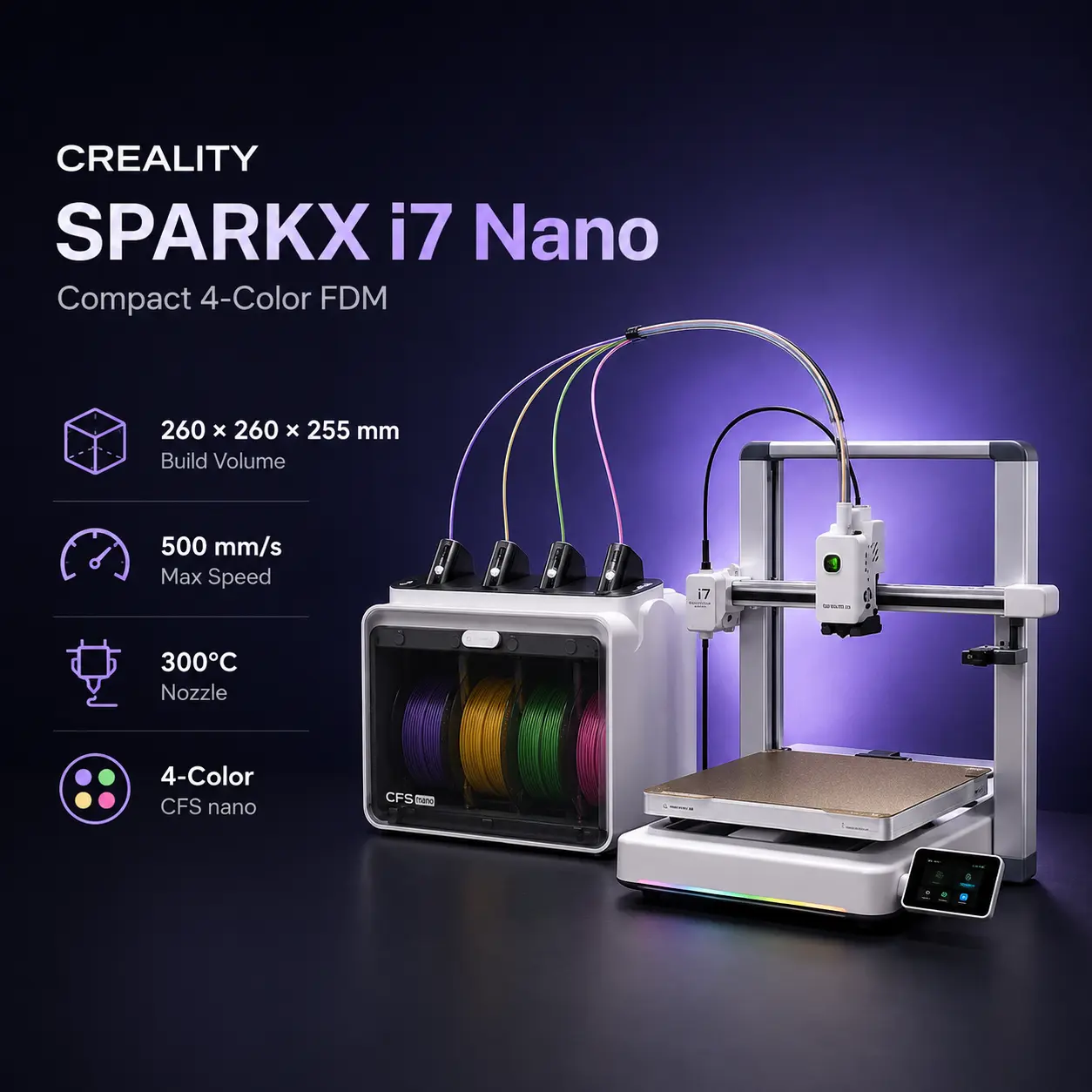
The Creality SPARKX i7 Nano combines the SPARKX i7 desktop FDM/FFF printer with the compact CFS Nano four-color filament system. The printer platform remains the SPARKX i7; the Nano bundle adds automated four-channel filament loading, unloading, refill, and color switching in a smaller open-spool arrangement than Creality's CFS Lite.
The SPARKX i7 provides a 260 × 260 × 255 mm build volume, 300 mm/s optimized print speed, 500 mm/s maximum print speed, 10,000 mm/s² maximum acceleration, a 300°C quick-swap hardened-steel hotend, and a 100°C heated bed. Full-auto leveling, input shaping, Pressure Advance, an integrated 720p AI camera, and 8 GB eMMC storage reduce setup and add print monitoring.
For current specifications, see the official SPARKX i7 product page and SPARKX i7 Wiki. The multi-color module is documented on the official CFS Nano kit page.
| Specification | Value |
|---|---|
| Technology | FDM / FFF |
| Configuration | SPARKX i7 + CFS Nano |
| Printer design | Open-frame desktop bedslinger |
| Build volume | 260 × 260 × 255 mm |
| Layer height | 0.05–0.30 mm |
| Standard nozzle | 0.4 mm hardened steel |
| Optional nozzles | 0.2 / 0.6 / 0.8 mm hardened steel |
| Maximum nozzle temperature | 300°C |
| Maximum bed temperature | 100°C |
| Build surface | Dual-sided textured PEI |
| Optimized print speed | 300 mm/s |
| Maximum print speed | 500 mm/s |
| Maximum acceleration | 10,000 mm/s² |
| Extruder | Direct drive |
| Leveling | Full-auto |
| Input shaping | Yes |
| Pressure Advance | Yes |
| Camera | 720p AI camera with lighting |
| Storage | 8 GB eMMC |
| Display | 2.85-inch 640 × 480 IPS touchscreen |
| File transfer | Wi-Fi / USB drive |
| Wi-Fi | 2.4 GHz |
| Firmware | Creality OS |
| Slicer | Creality Print 6.3 or newer |
| Printer dimensions | 470 × 423 × 456 mm |
| Net weight | 9.12 kg on current product page |
| Input | 100–240 V AC, 50/60 Hz |
| Rated power | 700 W at 220 V / 400 W at 110 V |
Creality's current product page lists 9.12 kg, while one current quick-start manual lists 9.28 kg. The current product-page value is used here.
The Nano name refers to the SPARKX i7 bundled with CFS Nano rather than a different printer chassis.
The printer keeps the same build volume, thermal limits, motion system, AI camera, calibration features, touchscreen, and software. CFS Nano adds four filament paths to the i7's multi-input toolhead manifold.
Creality's Nano kit provides:
This makes SPARKX i7 Nano a useful option for buyers who want automated color changes without adding a large enclosed filament box beside the printer.
Both systems enable four-color printing on SPARKX i7, but their priorities differ.
| Feature | CFS Nano | CFS Lite |
|---|---|---|
| SPARKX i7 support | Yes | Yes |
| Four-color printing | Yes | Yes |
| Spool arrangement | Open external spools | Enclosed four-slot unit |
| Auto load / unload | Yes | Yes |
| Auto refill | Yes | Yes |
| RFID identification | Not promoted as a Nano feature | Yes, with Creality RFID |
| Filament storage | Open | Enclosed with desiccant |
| Main advantage | Compact, lower-cost setup | Smarter protected filament management |
The SPARKX i7 Nano vs SPARKX i7 Color Combo decision is therefore mainly a CFS choice. Nano prioritizes compactness and price. CFS Lite adds enclosed storage, RFID-assisted identification, and more integrated filament management.
For current CFS Lite specifications, see the official CFS Lite product page.
Creality publishes 300 mm/s optimized speed, 500 mm/s maximum speed, and 10,000 mm/s² maximum acceleration.
The 500 mm/s figure is a machine maximum, not a normal speed for every feature. Actual throughput depends on filament, extrusion flow, layer height, geometry, cooling, and acceleration.
Multi-color jobs also spend time retracting, cutting, loading, purging, and wiping filament. A high movement-speed number therefore does not predict total multi-color print time by itself.
The SPARKX i7 ships with a 0.4 mm hardened-steel nozzle. Creality also offers 0.2, 0.6, and 0.8 mm hardened-steel options.
The hardened nozzle is useful for abrasive filaments such as PLA-CF and PETG-CF. Creality warns against using solid-filled materials with the 0.2 mm hotend because clogging risk is higher.
The quick-release design allows hotend changes without conventional tool disassembly, simplifying nozzle-size changes and maintenance.
Creality's main product page lists:
Creality's support documentation also covers PLA Silk and PETG-CF on the printer platform.
Because the i7 is open-frame, ABS and ASA are not recommended as general-purpose materials. Large high-shrink parts can warp or crack without enclosure control, and fumes also need appropriate ventilation.
TPU compatibility depends on hardness and feeding path. Harder flexible grades are more suitable for automated filament systems. Softer TPU should be approached through Creality's direct-feeding guidance rather than assumed to work reliably in every multi-color path.
SPARKX i7 includes:
Belt tensioning remains manual.
The built-in 720p AI camera adds spaghetti detection, air-printing detection, build-plate detection, and remote monitoring. AI detection improves failure awareness but cannot guarantee that every failure will be identified correctly.
SPARKX i7 uses Creality OS and Creality Print 6.3 or newer.
Connectivity includes 2.4 GHz Wi-Fi and USB-drive printing, while 8 GB of eMMC provides local storage. Creality also supports connected app and cloud workflows.
The RS-485 connection used by CFS accessories is an accessory-control bus rather than Ethernet networking.
| Printer | Build Volume | Published Speed | Nozzle / Bed | Multi-Color System | Main Difference |
|---|---|---|---|---|---|
| Creality SPARKX i7 Nano | 260 × 260 × 255 mm | 500 mm/s max print | 300°C / 100°C | CFS Nano, 4 colors | Compact four-color system and hardened nozzle |
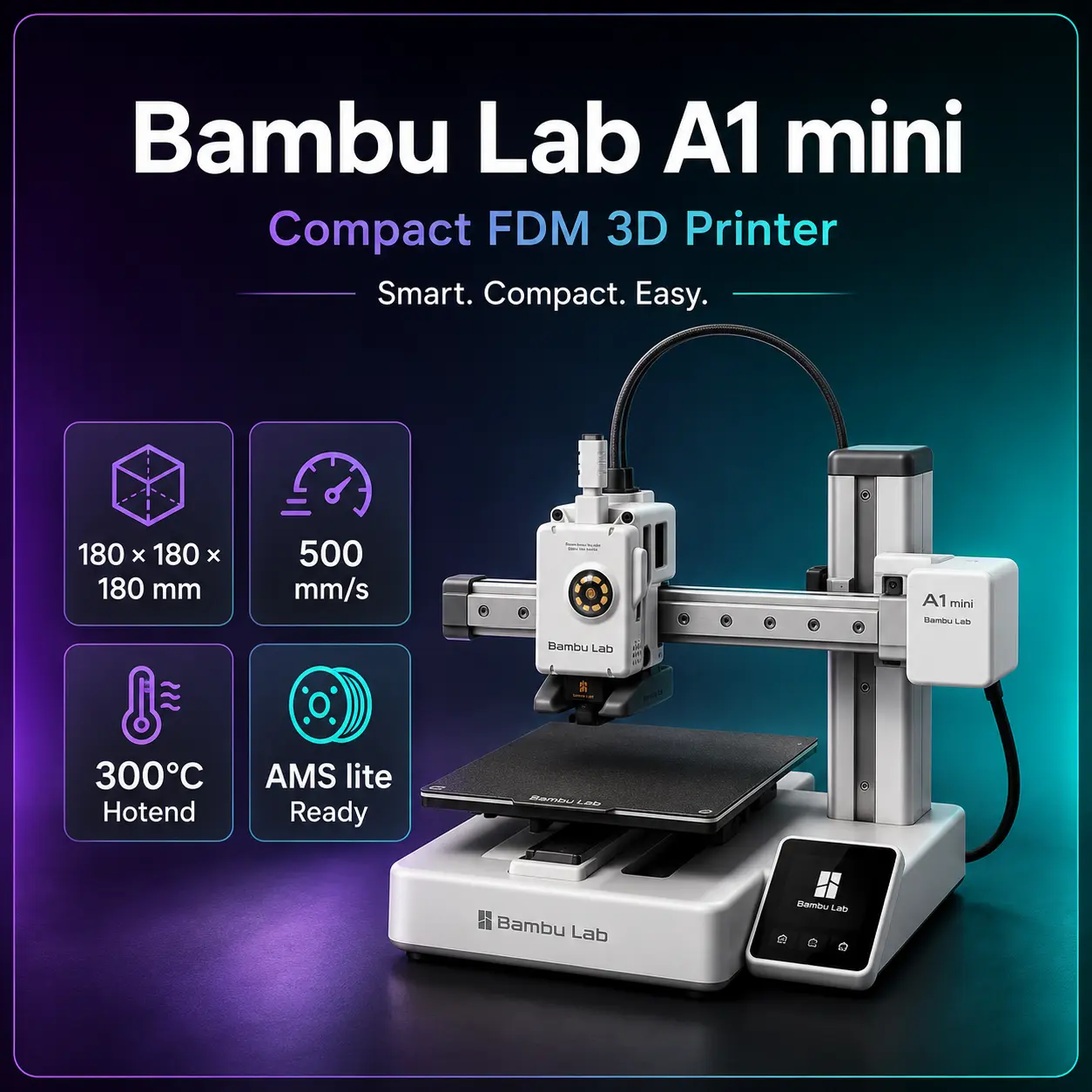
| Bambu Lab A1 | 256 × 256 × 256 mm | 500 mm/s max toolhead speed | 300°C / 100°C | AMS lite, 4 colors | Mature automation and active flow compensation |
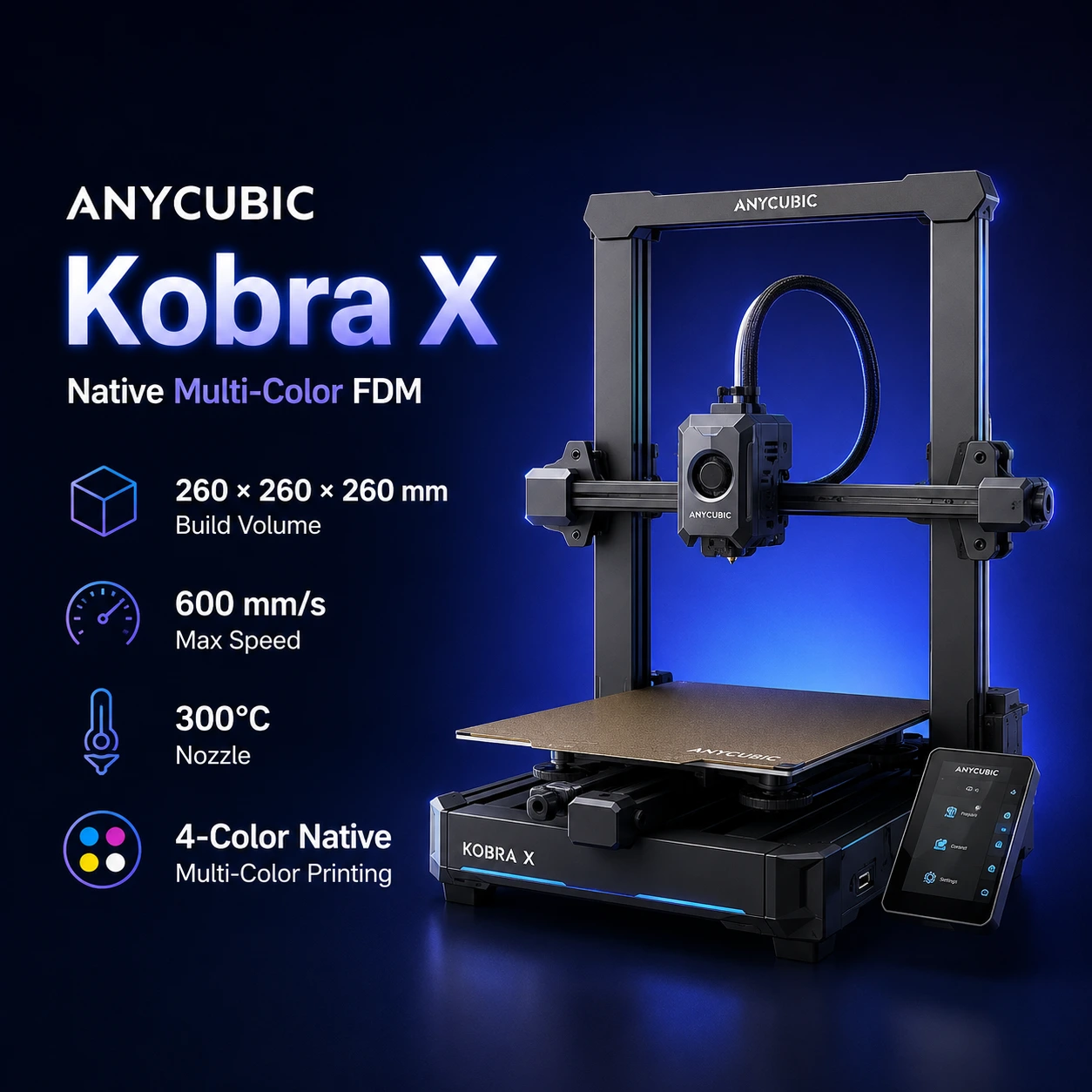
| Anycubic Kobra X | 260 × 260 × 260 mm | 600 mm/s max print | 300°C / 100°C | Native 4-color, expandable | Faster headline speed and broader published material list |
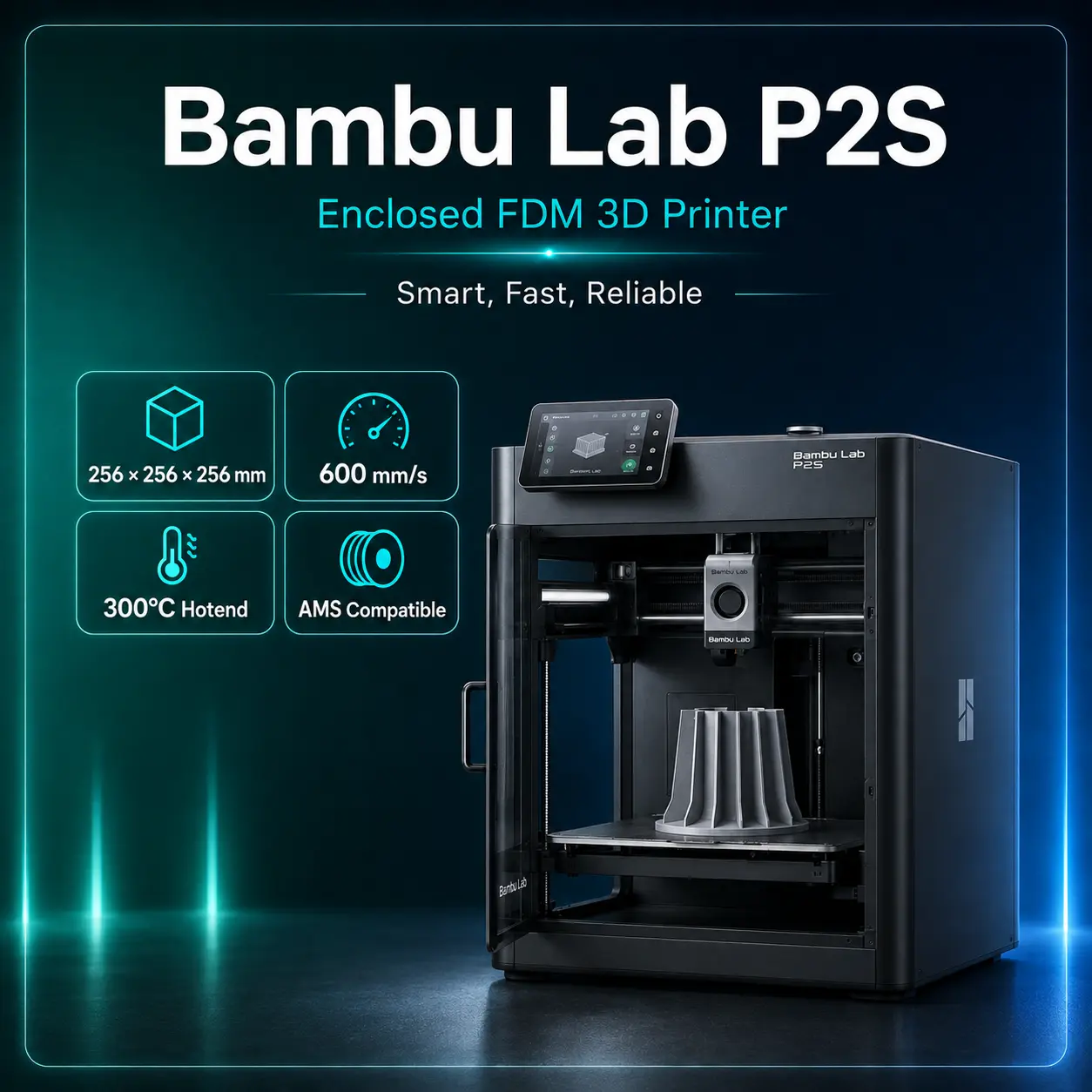
| Bambu Lab P2S | 256 × 256 × 256 mm | 600 mm/s max toolhead speed | 300°C / 110°C | AMS ecosystem | Enclosed step-up for engineering materials |
The Bambu Lab A1 has a 256 × 256 × 256 mm build volume, 300°C hotend, 100°C bed, 500 mm/s maximum toolhead speed, full-auto calibration, and optional four-color AMS lite.
SPARKX i7 Nano offers a slightly wider 260 mm XY area, the same 300°C / 100°C thermal limits, a hardened-steel nozzle as standard, a 720p AI camera, and CFS Nano four-color capability.
Choose A1 when the mature AMS lite and Bambu software ecosystem are the priority. Choose SPARKX i7 Nano when its compact Nano layout, hardened nozzle, Creality workflow, or lower current bundle price is more attractive.
The Anycubic Kobra X is another 260 mm-class four-color desktop printer.
It offers a 260 × 260 × 260 mm volume, 300 mm/s recommended speed, 600 mm/s maximum print speed, 300°C hardened-steel nozzle, 100°C bed, and native four-color printing. Anycubic also publishes support for PLA, PETG, TPU, PVA, PLA-CF, PETG-CF, and ASA.
SPARKX i7 Nano is 5 mm shorter in Z and has a lower 500 mm/s maximum, but it combines Creality's AI monitoring, quick-swap maintenance, Night Mode, and compact CFS Nano hardware.
Choose Kobra X for higher headline speed and its broader published material list. Choose SPARKX i7 Nano for Creality's compact four-color workflow and current pricing.
Both use the same SPARKX i7 printer.
Nano uses CFS Nano: four open spool positions, auto load/unload, auto refill, and a compact mounting arrangement.
Color Combo uses CFS Lite: four enclosed slots, desiccant-based storage, Creality RFID identification, and more integrated filament management.
Nano is better when compactness and lower cost matter. The Color Combo is better when spool protection and RFID automation justify the larger filament system.
The Bambu Lab P2S is a higher-tier enclosed alternative.
It has a 256 × 256 × 256 mm volume, 300°C hardened-steel nozzle, 110°C bed, 600 mm/s maximum toolhead speed, 20,000 mm/s² maximum acceleration, 1080p camera, and broader engineering-material support.
Choose SPARKX i7 Nano for affordable PLA/PETG/PLA-CF and four-color work. Choose P2S when an enclosure, ABS/ASA/PC/PA capability, reinforced materials, and a more expandable AMS workflow matter more than price.
Creality currently lists the SPARKX i7 Nano bundle from US$299, which is approximately €258 in Europe, £221 in the UK, AED 1,098 in the UAE, and ₹28,639 in India based on current exchange rates. Actual pricing may vary by region, taxes, shipping costs, promotions, and local retailer availability..
It is the SPARKX i7 printer bundled with Creality's CFS Nano four-color filament system.
No. The underlying printer is the SPARKX i7.
260 × 260 × 255 mm.
Creality specifies 500 mm/s maximum and 300 mm/s optimized speed.
A 0.4 mm hardened-steel nozzle.
300°C.
100°C.
Four.
Yes. It also supports automatic refill.
No. Both support four-color i7 printing, but CFS Lite adds enclosed desiccant storage and RFID identification.
Creality lists PLA, PETG, PLA-CF and harder TPU on the main product page, with additional guidance for PLA Silk and PETG-CF.
No. Creality does not recommend ABS and ASA as general-purpose materials on the open-frame i7.
Yes. The 720p camera supports spaghetti, air-printing and build-plate detection.
Creality Print 6.3 or newer.
Creality currently lists the SPARKX i7 Nano bundle from US$299, which is approximately €258 in Europe, £221 in the UK, AED 1,098 in the UAE, and ₹28,639 in India. Actual pricing may vary by region, taxes, shipping costs, promotions, and local retailer availability.