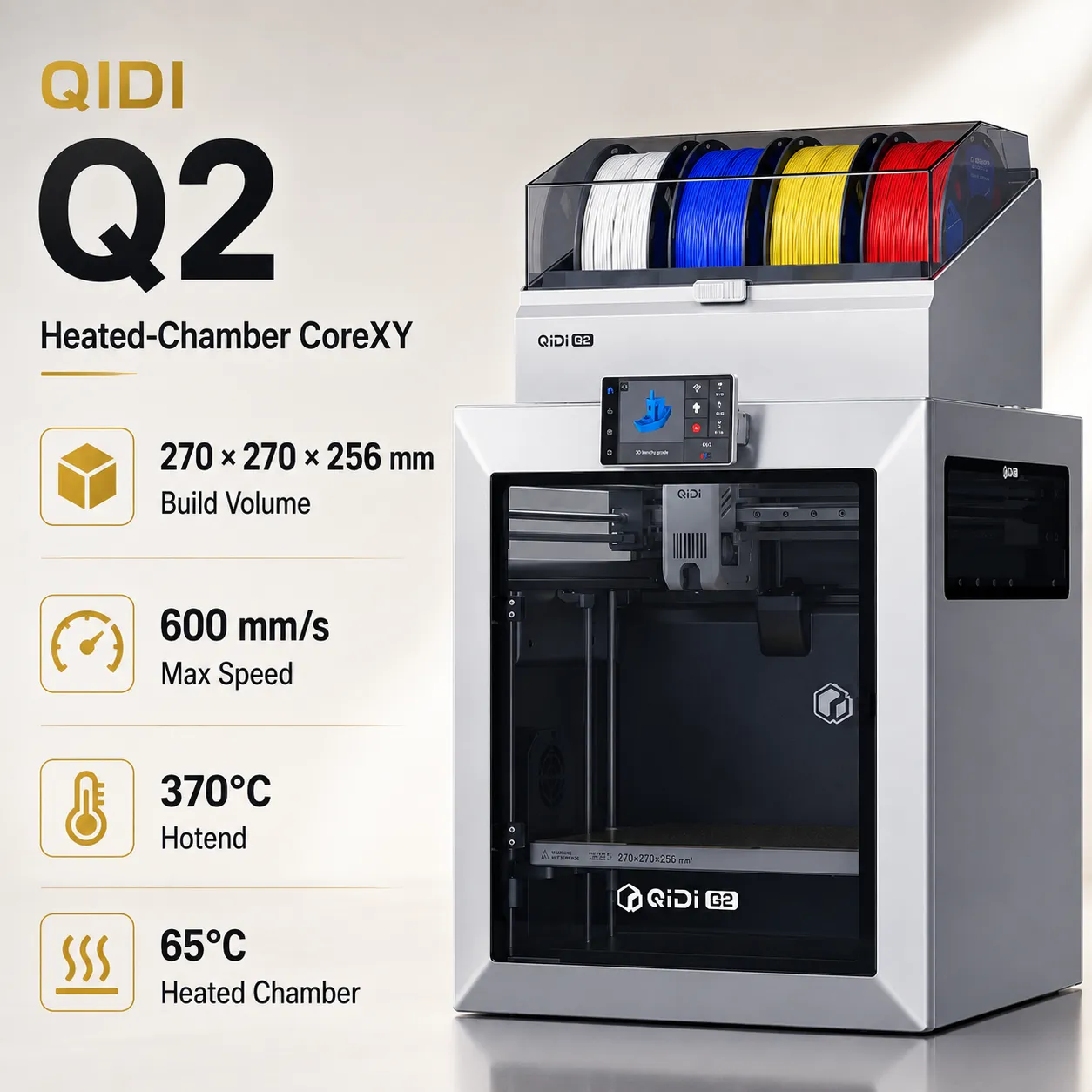
65°C Heated Chamber370°C High Temp HotendCarbon-Fiber ReadyEngineering Material PrintingQIDI Box CompatibleHigh-Speed CoreXY
QQIDI
QIDI
# QIDI Q2
The QIDI Q2 is a compact fully enclosed CoreXY FDM/FFF printer built for users who want easy everyday printing without giving up high-temperature engineering-material capability. Its core hardware combines a 270 × 270 × 256 mm build volume, 370°C hotend, 120°C heated bed, and 65°C actively heated chamber in a desktop enclosure.
QIDI rates the toolhead for up to 600 mm/s and 20,000 mm/s² acceleration, while its current FAQ notes that high-speed PLA and ABS are typically printed around 300 mm/s. The motion system uses a full-metal CoreXY frame, 1.5GT belts, a linear guide on the X axis, and dual independent Z lead-screw motors.
The Q2 also includes load-cell automatic leveling, input shaping, power-loss recovery, a 1080p-class AI camera, 32 GB eMMC storage, and three-stage air filtration. For multi-color or multi-material printing, it works with the optional QIDI Box, a four-slot heated filament system that can be expanded to as many as 16 colors with four boxes.
For current specifications and pricing, see the official QIDI Q2 product page, QIDI Q2 technical specifications, and QIDI Q2 support Wiki.
| Specification | Value |
|---|---|
| Printing technology | FDM / FFF |
| Motion system | CoreXY |
| Build volume | 270 × 270 × 256 mm |
| Printer dimensions | 402 × 438 × 494 mm |
| Net weight | 18.1 kg |
| Standard nozzle | 0.4 mm bimetal hardened-steel nozzle |
| Optional nozzle sizes | 0.2 / 0.6 / 0.8 mm |
| Maximum nozzle temperature | 370°C |
| Maximum bed temperature | 120°C |
| Maximum chamber temperature | 65°C active heating |
| Build surface | Dual-sided textured PEI |
| Maximum toolhead speed | 600 mm/s |
| Maximum acceleration | 20,000 mm/s² |
| Extruder | Direct drive, hardened-steel gears |
| XY hardware | CoreXY, 1.5GT belts |
| X axis | High-hardness linear guide |
| Z axis | Dual independent lead-screw motors |
| Bed leveling | Load-cell sensor integrated into hotend |
| Input shaping | Yes |
| Power-loss recovery | Yes |
| Camera | Up to 1080p, timelapse supported |
| AI detection | Spaghetti / print-failure detection |
| Storage | 32 GB eMMC + USB |
| Connectivity | Wi-Fi, Ethernet, USB |
| Display | 4.3-inch 480 × 272 touchscreen |
| Air filtration | G3 pre-filter + H12 HEPA + coconut-shell activated carbon |
| Filament diameter | 1.75 mm |
| Slicer | QIDI Studio; OrcaSlicer and PrusaSlicer compatible |
| Input power | 110 V / 220–240 V AC, 50/60 Hz |
| Rated power | 350 W printer + 280 W chamber heating |
Speed context: 600 mm/s is the maximum toolhead-speed specification. QIDI states that practical print speed depends on filament and nozzle flow, with high-speed PLA and ABS typically around 300 mm/s.
The Q2's 65°C active chamber heater is one of its most important differences from ordinary enclosed desktop printers.
An enclosure alone can trap heat, but an actively controlled chamber maintains a more predictable thermal environment. This matters for materials such as ABS, ASA, PC, PA and reinforced engineering polymers because uneven cooling can cause corner lift, warping, layer separation and internal stress.
QIDI's second-generation chamber system also circulates heated air around the build area. That makes the Q2 much better suited to high-shrink polymers than open-frame machines or enclosed printers that rely only on heat from the bed.
The chamber temperature still needs to match the filament and part geometry. More heat is not automatically better for PLA or other low-temperature materials.
The Q2 uses a next-generation hotend rated to 370°C.
The standard 0.4 mm nozzle is a bimetal hardened-steel design, and the direct-drive extruder uses hardened-steel gears. QIDI also supports 0.2, 0.6 and 0.8 mm nozzle sizes.
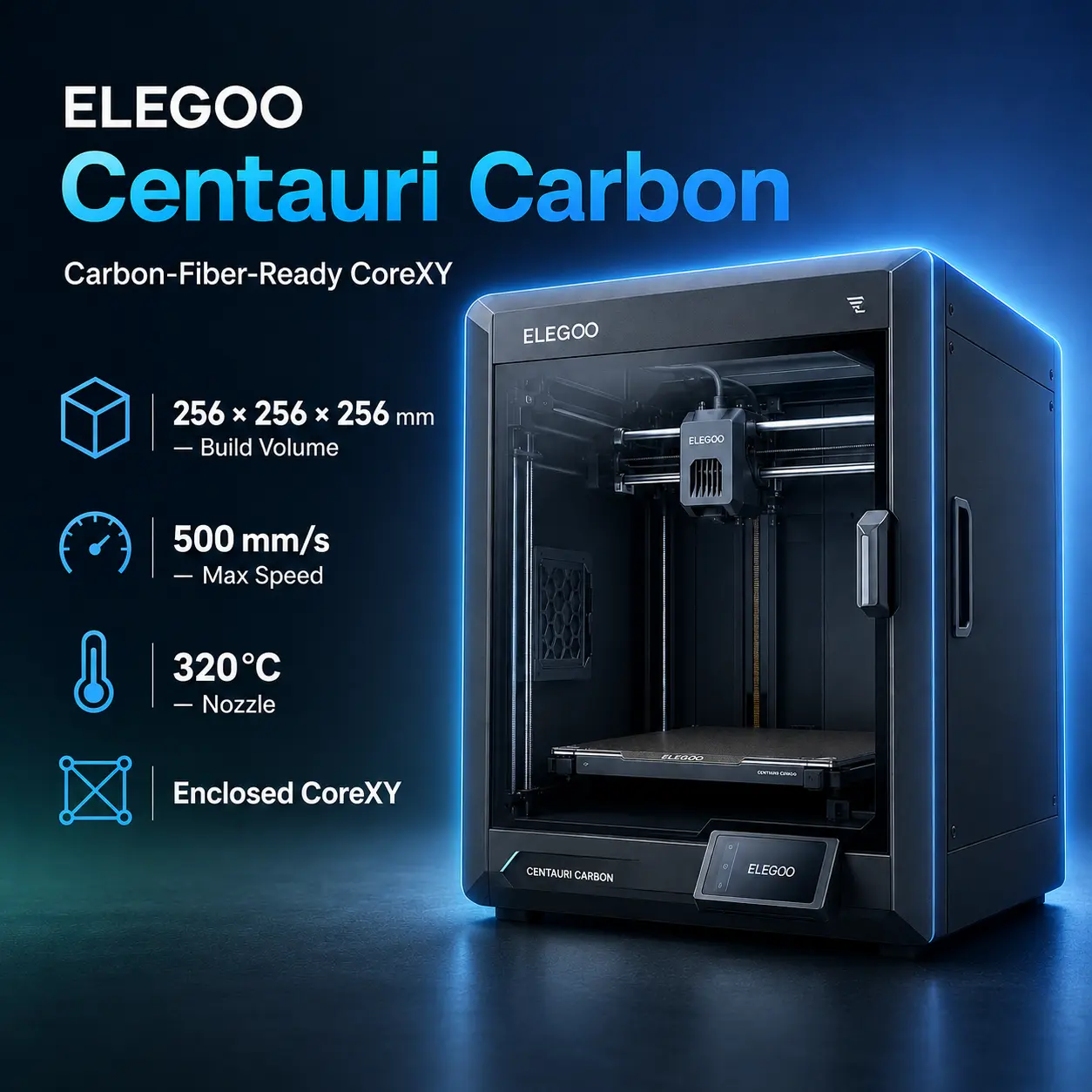
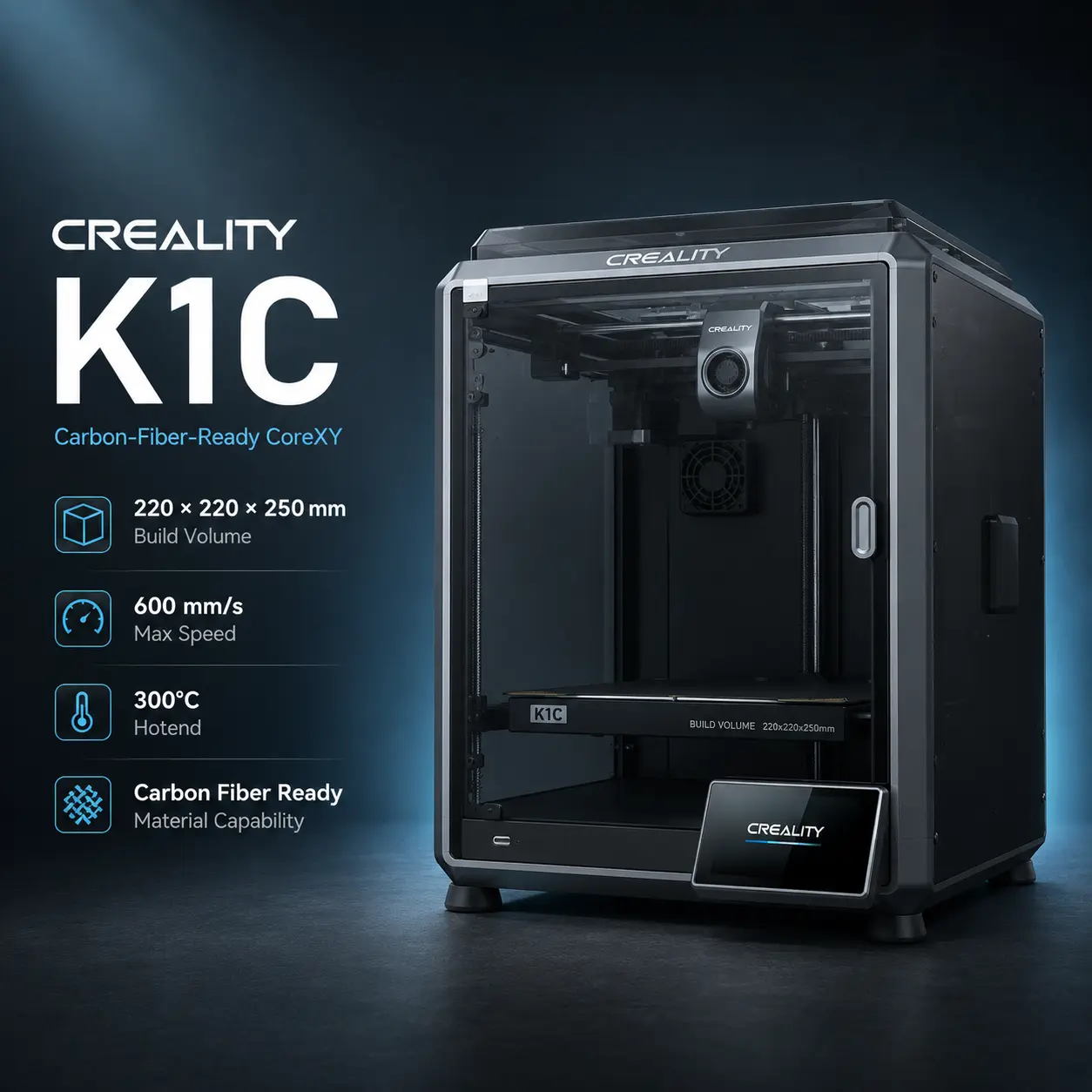
This hardware is intended to handle both ordinary filaments and abrasive engineering composites. QIDI specifically highlights PPS-CF capability and lists carbon- and glass-fiber-reinforced polymers among the supported material classes.
A high hotend temperature does not eliminate the need for drying, correct chamber conditions or a suitable build surface. Engineering polymers can still fail when moisture, cooling or adhesion is poorly controlled.
QIDI's current Q2 documentation lists:
QIDI recommends approximately 95A TPU/TPE for the most straightforward flexible-filament workflow. Very soft materials below roughly 85A can be more difficult to feed reliably.
For carbon-fiber printer selection and material considerations, see Best 3D Printers for Carbon Fiber Materials.
The Q2 uses the nozzle itself as the probing element through a load-cell sensor integrated into the hotend.
This removes the XY offset that exists when a separate probe sits beside the nozzle and allows the machine to measure the bed through direct nozzle contact.
QIDI markets the system around zero-offset first-layer calibration and hands-free leveling. The design is especially useful when changing build surfaces or working with engineering materials where a consistent first layer is critical.
Automatic leveling cannot compensate for every mechanical problem, so the build plate, nozzle and motion system still need normal maintenance.
The Q2 uses a full-metal CoreXY frame with 1.5GT belts and a linear guide on the X axis.
QIDI publishes:
Input shaping helps reduce ringing and vibration artifacts at higher speeds.
The useful speed for a real print still depends on volumetric flow, nozzle size, material, layer height, geometry and cooling. QIDI's own FAQ places typical high-speed PLA and ABS printing around 300 mm/s rather than implying that every feature should be printed at 600 mm/s.
The Q2 includes a camera rated up to 1080p and supports timelapse recording.
QIDI also uses the camera for AI-assisted spaghetti detection. This can help identify obvious print failures before they consume an entire spool or damage a long job.
AI monitoring is a safety and convenience feature rather than a guarantee. Small defects, warping, support failures or unusual model geometry may not always trigger detection.
The Q2 uses a three-stage filter:
QIDI states that the system captures 99.5% of dust and particles under its test conditions.
The activated-carbon stage can reduce some odors and VOCs, but filtration should not be treated as a substitute for appropriate room ventilation when printing ABS, ASA, PC or other materials known to emit fumes.
The standard Q2 is a single-nozzle printer, but it is compatible with the optional QIDI Box.
One QIDI Box provides:
Up to four QIDI Boxes can be chained for as many as 16 colors or materials.
The QIDI Box is available separately, while the Q2 Combo bundles the printer with the multi-color system.
For current specifications, see the official QIDI Box product page.
QIDI Box adds convenience, but it does not turn Q2 into an independent-tool printer.
All materials still feed through the printer's single hotend, so color and material transitions can require flushing. QIDI Studio provides options to direct purge material into supports, infill or a designated object, and it allows flushing-volume adjustments.
That makes QIDI Box strong for automated multi-color printing and soluble/breakaway supports, but dedicated-tool systems can still have an advantage when minimizing cross-contamination or purge waste is the highest priority.
The Box's 65°C drying while printing is a particularly useful feature for PA, PC, PPS and other moisture-sensitive engineering filaments.
QIDI Studio is the recommended slicer and provides the best integration with QIDI Box and the printer's connected features.
The Q2 also supports OrcaSlicer and PrusaSlicer.
Current QIDI documentation supports:
QIDI's FAQ currently describes dual-band Wi-Fi, while the technical-specification page lists 2.4 GHz. Wi-Fi support is therefore presented generically rather than assigning one band specification.
| Printer | Build Volume | Hotend / Bed | Active Chamber | Speed Figure | Multi-Material |
|---|---|---|---|---|---|
| QIDI Q2 | 270 × 270 × 256 mm | 370°C / 120°C | 65°C | 600 mm/s max toolhead | QIDI Box, up to 16 colors |
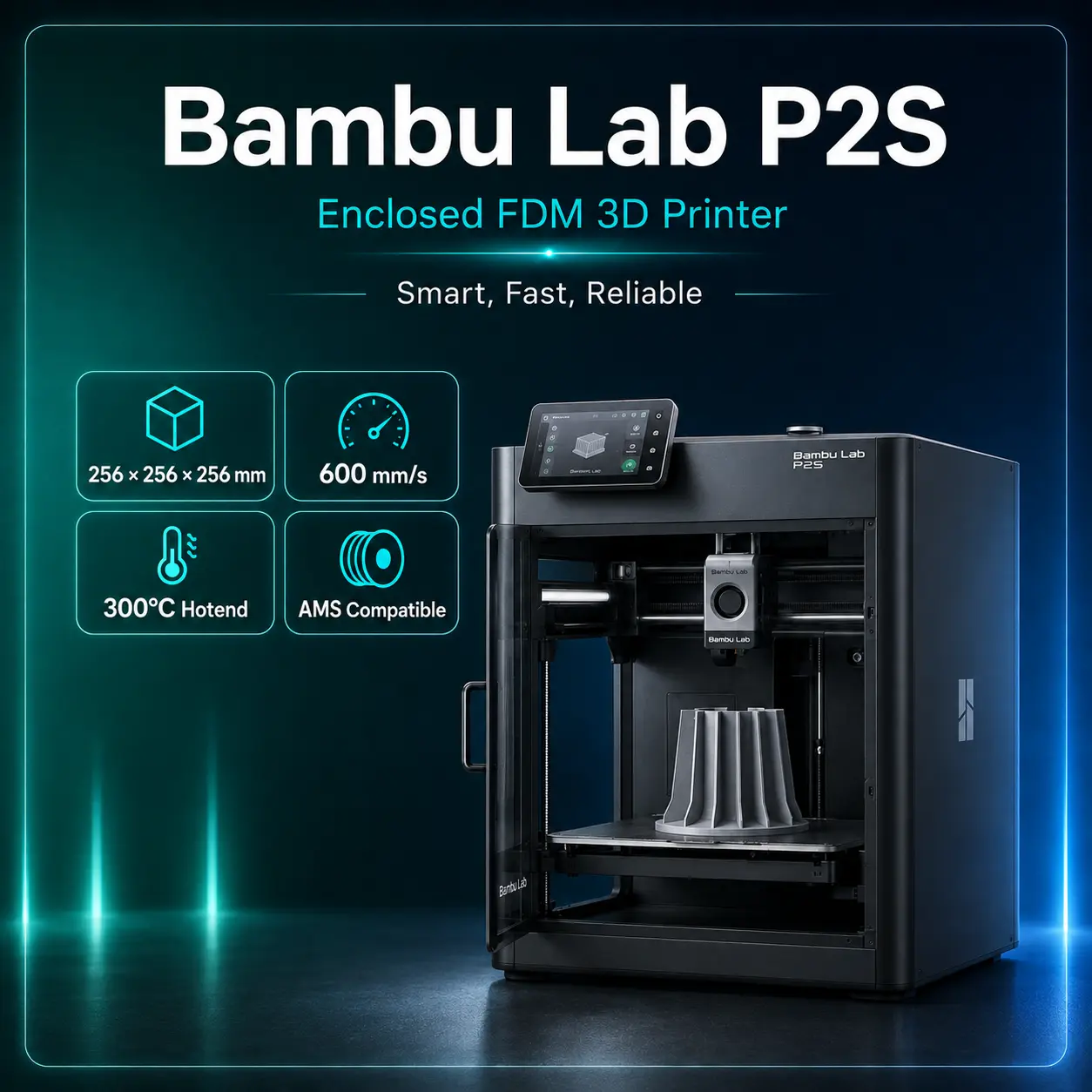
| Bambu Lab P2S | 256 × 256 × 256 mm | 300°C / 110°C | No active chamber heater published | 600 mm/s max toolhead | AMS ecosystem |
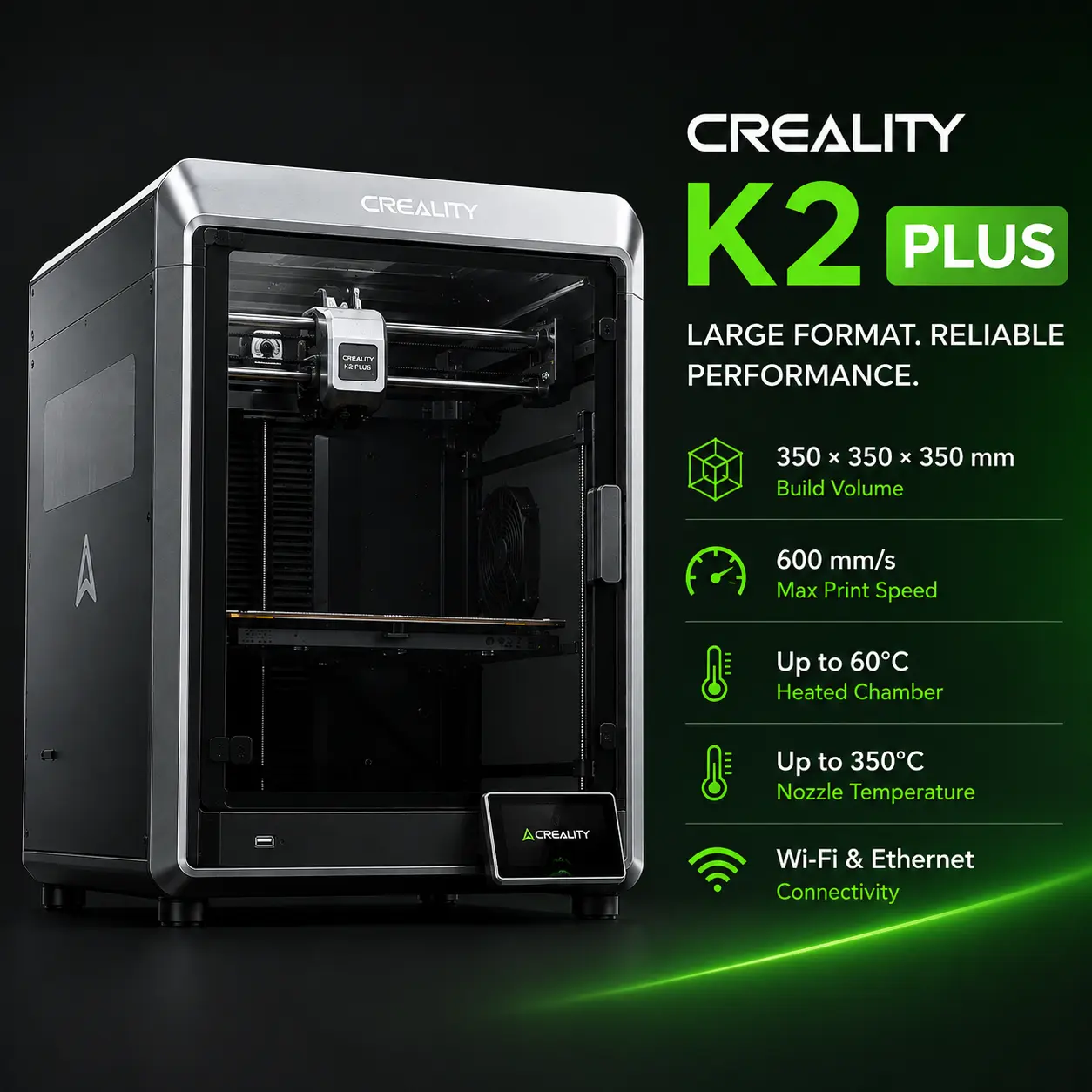
| Creality K2 Plus | 350 × 350 × 350 mm | 350°C / 120°C | 60°C | 600 mm/s max print | CFS, up to 16 colors |
| Prusa CORE One+ | 250 × 220 × 270 mm | 290°C standard / 400°C optional HT | 55°C | High-speed CoreXY; no single universal max mm/s published | INDX upgrade supports up to 8 colors |
| QIDI Plus4 | 305 × 305 × 280 mm | 370°C / 120°C | 65°C | 600 mm/s max toolhead | QIDI Box |
Q2's strongest value proposition is unusual thermal capability for its size and price: 370°C hotend and 65°C chamber in a 270 mm-class printer. The alternatives differentiate through larger build volume, mature automation ecosystems, independent-tool options or a larger QIDI chassis.
The QIDI Q2 vs Bambu Lab P2S comparison is one of the most relevant for buyers choosing a compact enclosed CoreXY printer.
The Bambu Lab P2S has a 256 × 256 × 256 mm build volume, 300°C hardened-steel nozzle, 110°C bed, 600 mm/s maximum toolhead speed, 20,000 mm/s² acceleration, a 1080p camera, and support for the AMS ecosystem.
Q2 provides slightly more XY space and substantially higher thermal hardware: 370°C nozzle, 120°C bed and a 65°C actively heated chamber.
Choose QIDI Q2 for ABS, PC, PA, PPS-CF and other high-temperature engineering-material workflows where chamber heating matters.
Choose P2S when Bambu's software, monitoring, AMS ecosystem, automatic flow features and broader established consumer workflow are higher priorities.
The QIDI Q2 vs Creality K2 Plus comparison is mainly compact value versus large-format capability.
The Creality K2 Plus provides a much larger 350 × 350 × 350 mm build volume, a 350°C nozzle, 120°C bed, 60°C actively heated chamber, and maximum print speed up to 600 mm/s.
K2 Plus also offers CFS multi-color expansion up to 16 colors and a more elaborate step-servo motion and AI-camera system.
Q2 is far smaller and less expensive while offering an even higher 370°C hotend rating and 65°C chamber.
Choose Q2 for a compact engineering printer. Choose K2 Plus when large parts, a 350 mm cube and Creality's flagship ecosystem justify the larger footprint and price.
The QIDI Q2 vs Prusa CORE One+ comparison highlights different engineering philosophies.
The Prusa CORE One+ provides a 250 × 220 × 270 mm build volume and 55°C active chamber temperature control. Its standard nozzle limit is 290°C, with an optional HT upgrade reaching 400°C.
Prusa emphasizes open-source hardware and firmware, long-term repairability, extensive tuned material profiles, PrusaSlicer integration and the optional INDX multi-material ecosystem.
Q2 offers more XY build area, a 370°C standard hotend, hotter 65°C chamber and lower entry price.
Choose Q2 when high-temperature capability per dollar is the priority. Choose CORE One+ when open-source design, long-term serviceability and the Prusa ecosystem matter more.
The QIDI Q2 vs QIDI Plus4 comparison is useful for buyers deciding between QIDI's compact and larger engineering platforms.
The QIDI Plus4 provides a larger 305 × 305 × 280 mm build volume while sharing several important specifications with Q2:
Q2 is smaller at 402 × 438 × 494 mm and weighs 18.1 kg, making it easier to place on a desk.
Plus4 is the better choice when build volume is more important. Q2 is the stronger compact-value option for users who want similar thermal capability in a smaller chassis.
The QIDI Q2 is currently available from US$499 in the United States, approximately €431 in Europe, £369 in the UK, C$694 in Canada, A$704 in Australia, ₹47,795 in India, and AED 1,833 in the UAE. Actual regional pricing may vary depending on local taxes, shipping costs, distributor pricing, bundles, availability, and ongoing promotions.
270 × 270 × 256 mm.
The toolhead is rated up to 600 mm/s with 20,000 mm/s² maximum acceleration. QIDI says high-speed PLA and ABS typically print around 300 mm/s.
370°C.
120°C.
Yes. Its second-generation independent chamber heater reaches up to 65°C.
A 0.4 mm bimetal hardened-steel nozzle.
Yes. QIDI specifically highlights PPS-CF and supports other carbon- and glass-fiber-reinforced polymers.
Yes. QIDI recommends approximately 95A TPU/TPE for easier printing, while very soft grades can be more difficult.
Yes, with the optional QIDI Box.
One box has four slots. Up to four boxes can be chained for as many as 16 colors or materials.
Yes. It supports drying while printing up to 65°C.
Yes. Its camera supports spaghetti detection and timelapse recording.
G3 pre-filter, H12 HEPA and coconut-shell activated carbon.
QIDI Studio is recommended, and QIDI also supports OrcaSlicer and PrusaSlicer.
Yes. QIDI lists Wi-Fi, Ethernet and USB connectivity.
The QIDI Q2 is currently available from US$499 in the United States, approximately €431 in Europe, £369 in the UK, C$694 in Canada, A$704 in Australia, ₹47,795 in India, and AED 1,833 in the UAE. Actual regional pricing may vary depending on local taxes, shipping costs, distributor pricing, bundles, availability, and ongoing promotions.