Engineering GradeEasy to PrintFlexible Wear-Resistant TPUDurable Engineering TPUHigh-Wear Flexible FilamentShore 95A Flexible TPU
PPrusa
Prusa
Compact row for standout or material-specific features only.
# Prusament TPU 95A
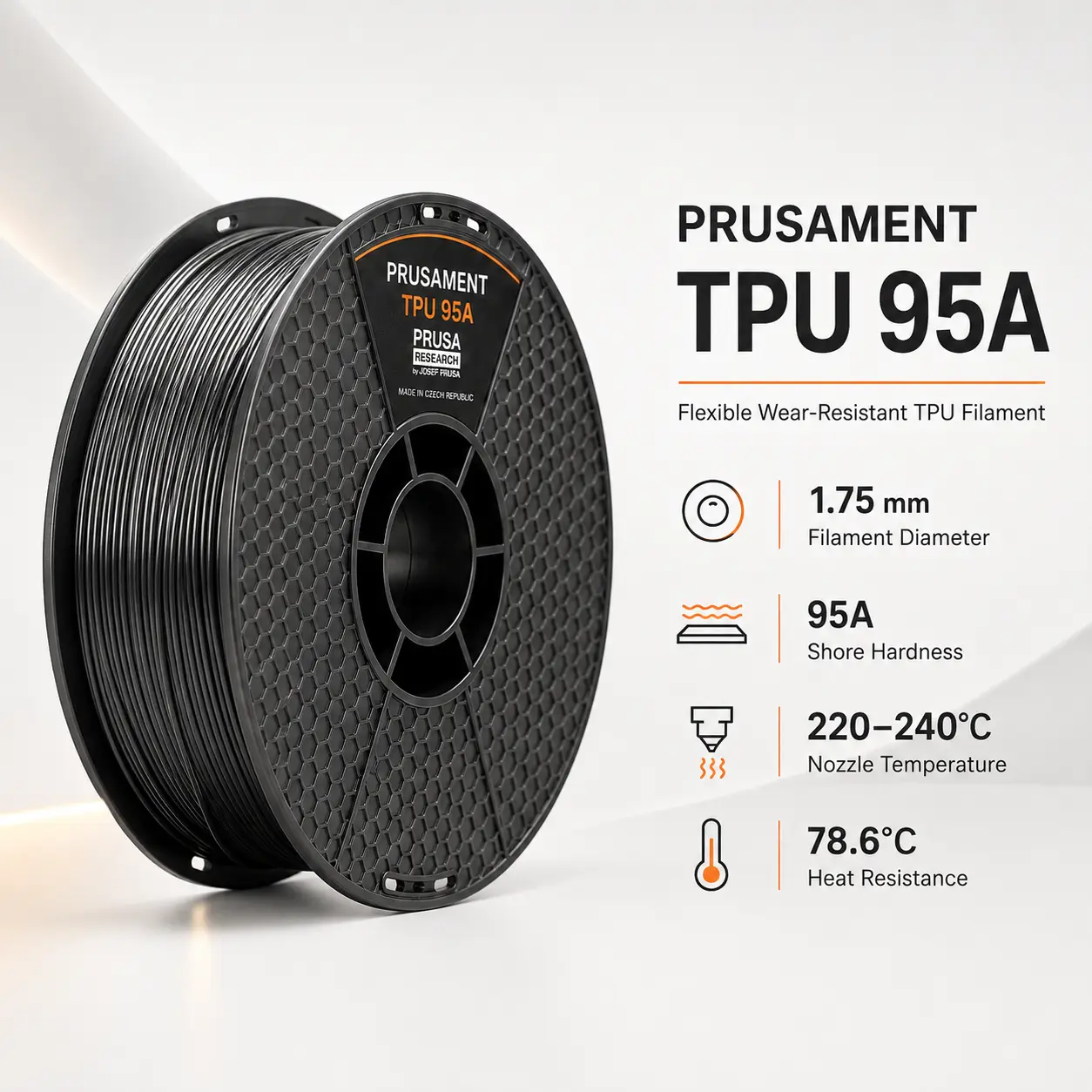
Prusament TPU 95A is a flexible 1.75 mm TPU filament with Shore 95A hardness, extreme wear resistance, high impact durability, very low moisture absorption and strong hydrolysis resistance. Thin sections remain soft and flexible, while thicker walls and higher infill create stronger, more rigid parts.
It is well suited to grips, protective covers, cable protectors, O-rings, spacers, tires and other flexible engineering components. For rigid alternatives, compare Prusament PETG and Polymaker PLA Pro.
| Specification | Value |
|---|---|
| Material Type | Filament |
| Chemistry | TPU |
| Printing Compatibility | FDM |
| Applications | Prototype, Engineering, Industrial, Production |
| Shore Hardness | 95A |
| Print Temperature | 220–240°C |
| Bed Temperature | 55–75°C |
| Format | 1.75 mm, 500 g spool |
| Mechanical Profile | Flexible, impact resistant and highly wear resistant |
| Heat Deflection Temperature | 78.6°C at 1.80 MPa |
| Low-Temperature Performance | Flexible to approximately -50°C |
| Abrasive | No |
| Enclosure | Not required |
| Storage / Drying | 60°C for at least 4 h if moisture-related issues occur |
| Diameter Tolerance | Up to ±0.06 mm |
Note: Prusa recommends approximately 230 ±10°C nozzle temperature and 65 ±10°C bed temperature. Flexible-filament feeding may require printer-specific adjustments.
The Prusa CORE One+ is a relevant Prusa platform because TPU 95A is optimized for Nextruder-equipped machines. Other indexed TPU-capable printers include the Bambu Lab A1, Bambu Lab P2S and Creality K2 Plus, with printer-specific feeding and accessory guidance.
Important: Smooth PEI is not recommended for direct TPU printing because adhesion can be excessive. Use a suitable separation layer if required.
| Property | Information |
|---|---|
| Shore hardness | 95A |
| Flexibility | High |
| Impact resistance | High |
| Wear resistance | Extreme |
| Heat-deflection temperature | 78.6°C at 1.80 MPa |
| Low-temperature flexibility | Approximately -50°C |
| Moisture absorption | Very low |
| Hydrolysis resistance | High |
| Abrasivity | None |
Note: Mechanical behaviour depends strongly on wall thickness, infill, print orientation and geometry.
Print at approximately 230 ±10°C with a 65 ±10°C bed. TPU normally prints slower than rigid filament because flexible material requires controlled feeding.
Drying is usually unnecessary under good storage conditions. If moisture-related issues occur, dry at 60°C for at least 4 hours and store the filament dry.
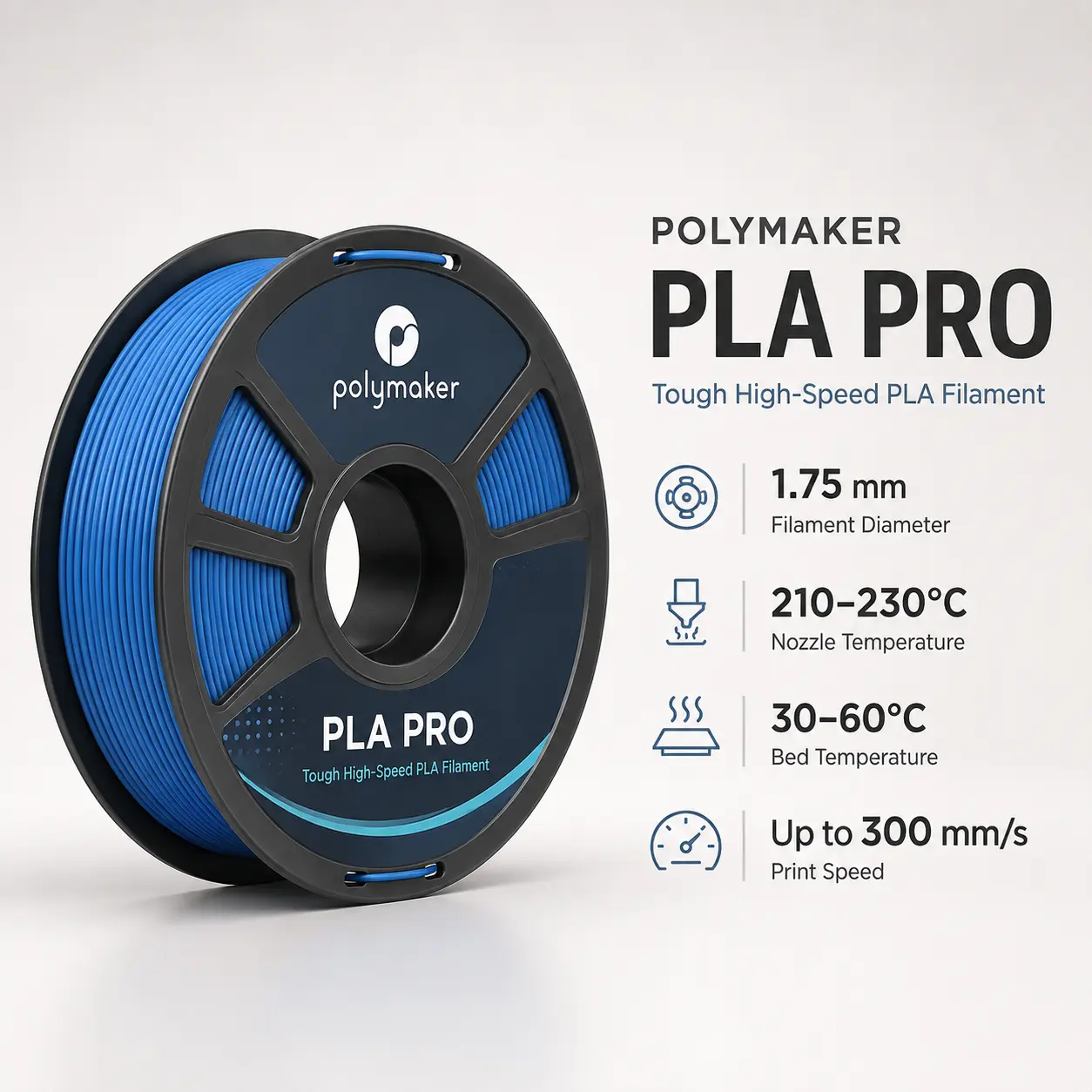
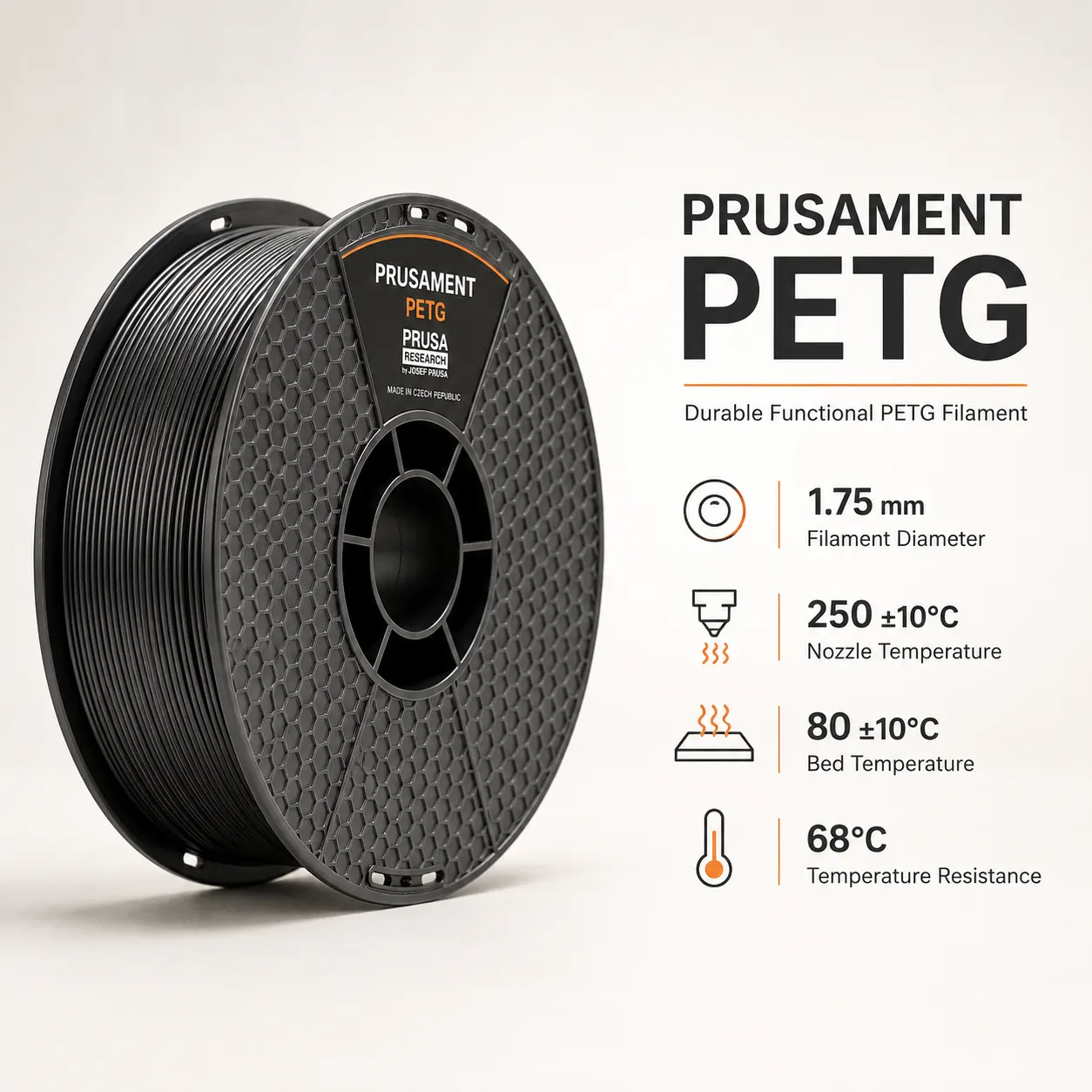
For parts that do not require flexibility, Prusament PETG provides a tough rigid alternative, while Polymaker PLA Pro is better suited to rigid high-speed prototypes and fixtures.
| Feature | Prusament TPU 95A | Prusament PETG | Polymaker PLA Pro |
|---|---|---|---|
| Material family | TPU | PETG | Toughened PLA |
| Flexibility | High | Low | Low to moderate |
| Wear resistance | Extreme | Good | General functional durability |
| Nozzle temperature | 220–240°C | 240–260°C | 210–230°C |
| Bed temperature | 55–75°C | 70–90°C | 30–60°C |
| Heat resistance | 78.6°C HDT at 1.80 MPa | ~68°C HDT | 55.6°C HDT at 1.8 MPa |
| Enclosure | No | No | No |
| Abrasive | No | No | No |
| Typical use | Flexible wear-resistant parts | Tough rigid engineering parts | High-speed rigid prototypes and tooling |
Recommended use: Choose Prusament TPU 95A when flexibility, wear resistance and impact durability are required. Choose Prusament PETG for tough rigid parts or Polymaker PLA Pro for rigid high-speed prototypes.
Recommended use: Best for flexible engineering components such as grips, seals, protective parts, cable protectors and tires. For a Prusa workflow, use a suitable profile on the Prusa CORE One+.
It is a flexible 1.75 mm TPU filament with Shore 95A hardness, extreme wear resistance and low moisture absorption.
Approximately 230 ±10°C nozzle and 65 ±10°C bed.
No.
No. A hardened nozzle is not required for abrasion resistance.
Prusa reports an HDT of 78.6°C at 1.80 MPa.
Usually not. If moisture-related issues occur, dry at 60°C for at least 4 hours.
PA Nylon and Satin are preferred; PP and Textured sheets can also be used with suitable preparation.
The Prusa CORE One+, Bambu Lab A1, Bambu Lab P2S and Creality K2 Plus are relevant TPU-capable platforms with appropriate setup.