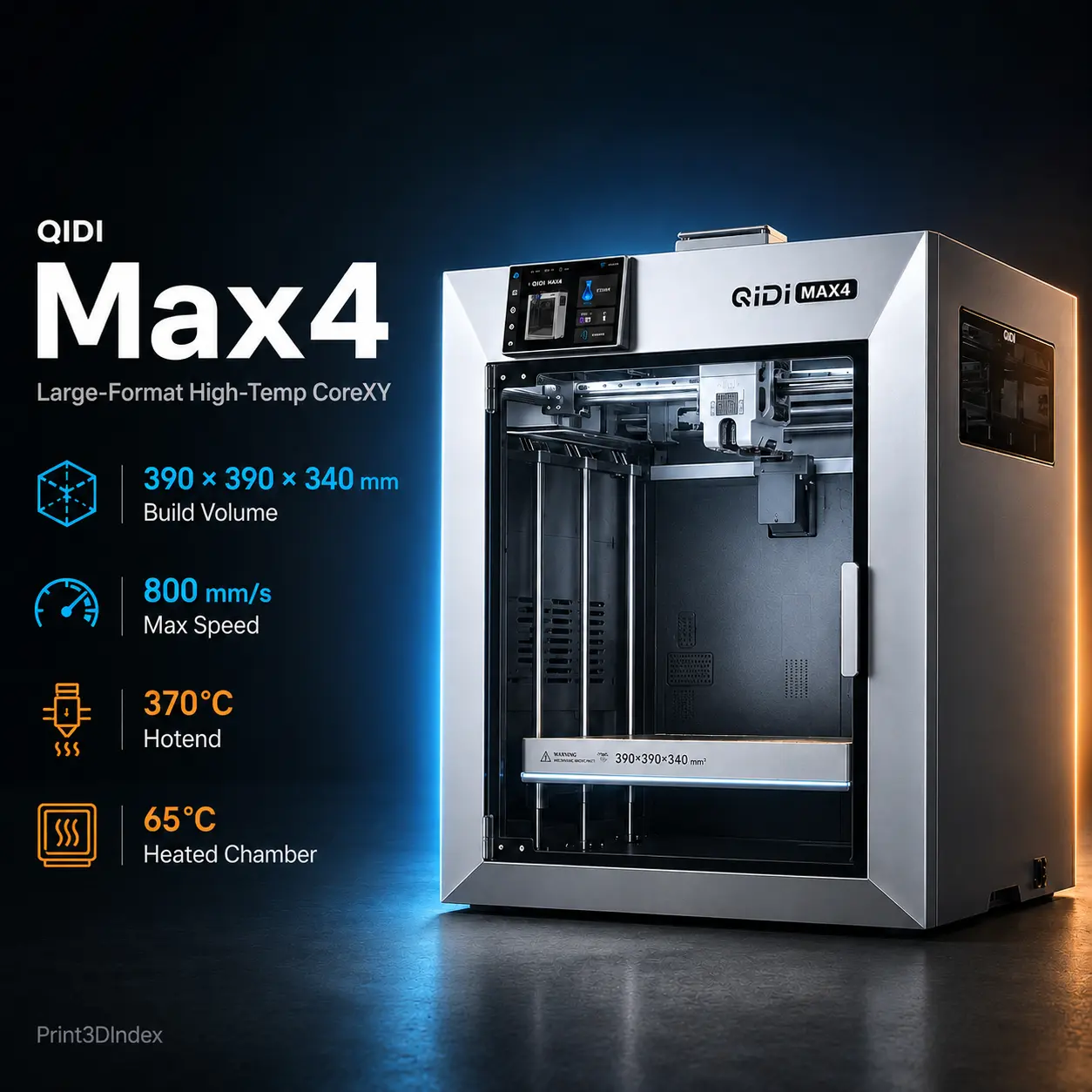
390 mm Large-Format Build370°C Engineering Hotend65°C Active Heated Chamber800 mm/s CoreXY MotionClosed-Loop Motion ControlQIDI Box Multi-Material Ready
QQIDI
QIDI
# QIDI Max4
The QIDI Max4 is a large-format enclosed CoreXY 3D printer built for engineering materials, tooling, functional prototypes, and small-batch production. Its 390 × 390 × 340 mm build volume gives it substantially more XY capacity than most desktop engineering printers while retaining an actively heated enclosure.
QIDI combines that build space with a 370°C hotend, 120°C heated bed, and 65°C independent chamber heating. The motion system is rated for up to 800 mm/s toolhead speed, 30,000 mm/s² acceleration, and 40 mm³/s maximum hotend flow.
The Max4 also uses FOC closed-loop stepper motors, a high-hardness X-axis linear rail, 12 mm Y-axis shafts, independent Z motors with 2 mm lead screws, load-cell automatic leveling, a 1080p camera with AI failure detection, three-stage air filtration, and optional QIDI Box multi-color support.
For current specifications and pricing, see the official QIDI Max4 page and QIDI Max4 technical specifications. For broader buying context, see Best 3D Printers for Carbon-Fiber Materials in 2026 and Best 3D Printers for Small Business & Prototyping in 2026.
| Specification | Value |
|---|---|
| Printing technology | FDM / FFF |
| Motion system | CoreXY |
| Build volume | 390 × 390 × 340 mm |
| Build plate / heated-bed area | 390 × 390 mm |
| Standard nozzle | 0.4 mm bimetal |
| Optional nozzle sizes | 0.2 / 0.6 / 0.8 mm |
| Maximum toolhead speed | 800 mm/s |
| Maximum acceleration | 30,000 mm/s² |
| Maximum published hotend flow | 40 mm³/s |
| Maximum nozzle temperature | 370°C |
| Maximum bed temperature | 120°C |
| Chamber heating | Independent active heating up to 65°C |
| Extruder | Direct drive, hardened-steel dual gears |
| Motion motors | FOC closed-loop steppers |
| XY belts | 1.5GT, 10 mm width |
| X axis | High-hardness linear guide rail |
| Y axis | 12 mm linear steel shafts |
| Z axis | 2 independent motors / 2 mm lead screws / 4 × 12 mm shafts |
| Build surface | Dual-sided textured PEI plate |
| Bed leveling | Load-cell hands-free automatic leveling |
| Camera | Up to 1080p / timelapse / AI detection |
| Filament runout sensor | Yes |
| Tangle detection | With QIDI Box |
| Power-loss recovery | Yes |
| Input shaping | Yes |
| Air filtration | G3 pre-filter + H12 HEPA + coconut-shell activated carbon |
| Storage | 32 GB eMMC + USB |
| Connectivity | 2.4 / 5 GHz Wi-Fi, Ethernet, USB |
| Display | 5-inch 800 × 480 touchscreen |
| Slicer | QIDI Studio |
| Third-party slicers | OrcaSlicer / PrusaSlicer |
| Printer dimensions | 558 × 578 × 612 mm |
| Net weight | 40 kg |
| Voltage | 110 V / 220–240 V AC, 50/60 Hz |
| Published power breakdown | 150 W system + 500 W chamber + 700 W bed |
Speed note: 800 mm/s is the maximum toolhead-speed specification. Real print speed depends on filament, geometry, nozzle diameter, acceleration, cooling, and volumetric-flow demand.
The 390 × 390 × 340 mm build volume suits large housings, automotive and robotics prototypes, workshop fixtures, jigs, composite brackets, and production batches.
Large engineering parts benefit from chamber control because shrinkage accumulates across longer dimensions. The Max4's 65°C chamber is therefore more meaningful than hotend temperature alone on a 390 mm platform.
At 40 kg and 558 × 578 × 612 mm, the printer needs a stable bench and adequate service clearance.
The Max4 is designed around high-temperature materials.
Its thermal system provides:
That combination supports common materials such as PLA and PETG while giving much better thermal control for ABS, ASA, PA, PC, PPS-CF, and reinforced engineering polymers.
A heated chamber helps reduce temperature gradients, warping, and internal stress in large parts. It does not remove the need for correct material drying, build-surface preparation, nozzle selection, or validated slicer profiles.
The printer's current FAQ explicitly identifies PPS-CF among its supported engineering materials.
For an example of the thermal demands associated with PPS-CF, see the indexed Bambu Lab PPS-CF. Material settings are brand-specific, so use the filament manufacturer's profile rather than assuming one PPS-CF recipe works for every formulation.
QIDI lists PLA, PETG, ABS, ASA, TPU, PA, PC, carbon- and glass-fiber-reinforced polymers, while the Max4 FAQ specifically names PPS-CF.
The hardened dual-drive gears, bimetal nozzle, 370°C hotend, and heated chamber make the printer well suited to abrasive engineering materials, but filament drying, chamber temperature, nozzle wear, and layer adhesion still require material-specific setup.
The Max4 supports TPU, although QIDI notes that materials softer than about 85A may show reduced print quality. High chamber temperature can also soften filament before the melt zone, so chamber settings should stay below the material's softening range.
The optional Polar Cooler helps cool the extruder and feed path during heated-chamber use; it is not standard equipment.
QIDI publishes 800 mm/s maximum toolhead speed, 30,000 mm/s² acceleration, and 40 mm³/s maximum hotend flow. FOC closed-loop steppers, 1.5GT belts, and the X-axis linear rail support the motion system.
The flow figure is the more useful throughput limit: maximum toolhead speed does not mean every material can be extruded at that rate.
The Max4 uses two independent Z motors, 2 mm lead screws, anti-backlash hardware, and four 12 mm shafts. A load cell integrated into the hotend handles hands-free automatic leveling over the large dual-sided textured PEI plate.
The rigid Z system helps large, tall prints, but plate cleanliness and material-specific adhesion settings still matter.
The Max4 includes an up-to-1080p camera with timelapse and AI failure detection. Filtration combines a G3 pre-filter, H12 HEPA stage, and coconut-shell activated carbon.
Filtration can reduce particulates and odors inside the printer, but appropriate workspace ventilation is still important for materials that emit fumes or ultrafine particles.
The standard Max4 is compatible with the optional QIDI Box.
One box provides four filament slots. Up to four boxes can be connected with the required expansion hardware for as many as 16 filament channels.
The official QIDI Box adds hardened dual feed gears, automatic spool relay, runout/clog/tangle monitoring, NFC recognition for compatible QIDI spools, sealed storage, temperature/humidity monitoring, and drying while printing up to 65°C.
The standard Max4 does not include QIDI Box unless purchased as a Combo or bundle.
The QIDI Box material list is not identical to the Max4 printer's material list.
QIDI lists Box support for many rigid materials and selected composites, but generic TPU, TPU 95A, TPE, damp PVA/BVOH, and QIDI PAHT-CF are not listed as Box-compatible.
That distinction matters: the Max4 can print TPU, but TPU 95A should not automatically be routed through QIDI Box. Cardboard spools also require an appropriate adapter.
The Max4 supports 2.4/5 GHz Wi-Fi, Ethernet, USB, and 32 GB eMMC storage. QIDI Studio is the primary slicer, while QIDI also lists OrcaSlicer and PrusaSlicer compatibility.
QIDI Cloud and mobile/PC control are software services rather than physical connection types.
| Printer | Build Volume | Max Toolhead Speed | Nozzle / Bed / Chamber | Multi-Material Approach | Main Strength |
|---|---|---|---|---|---|
| QIDI Max4 | 390 × 390 × 340 mm | 800 mm/s | 370°C / 120°C / 65°C | QIDI Box, up to 16 channels | Largest XY + highest hotend temperature here |
| QIDI Plus4 | 305 × 305 × 280 mm | 600 mm/s | 370°C / 120°C / 65°C | QIDI Box | Smaller, lower-cost QIDI engineering platform |
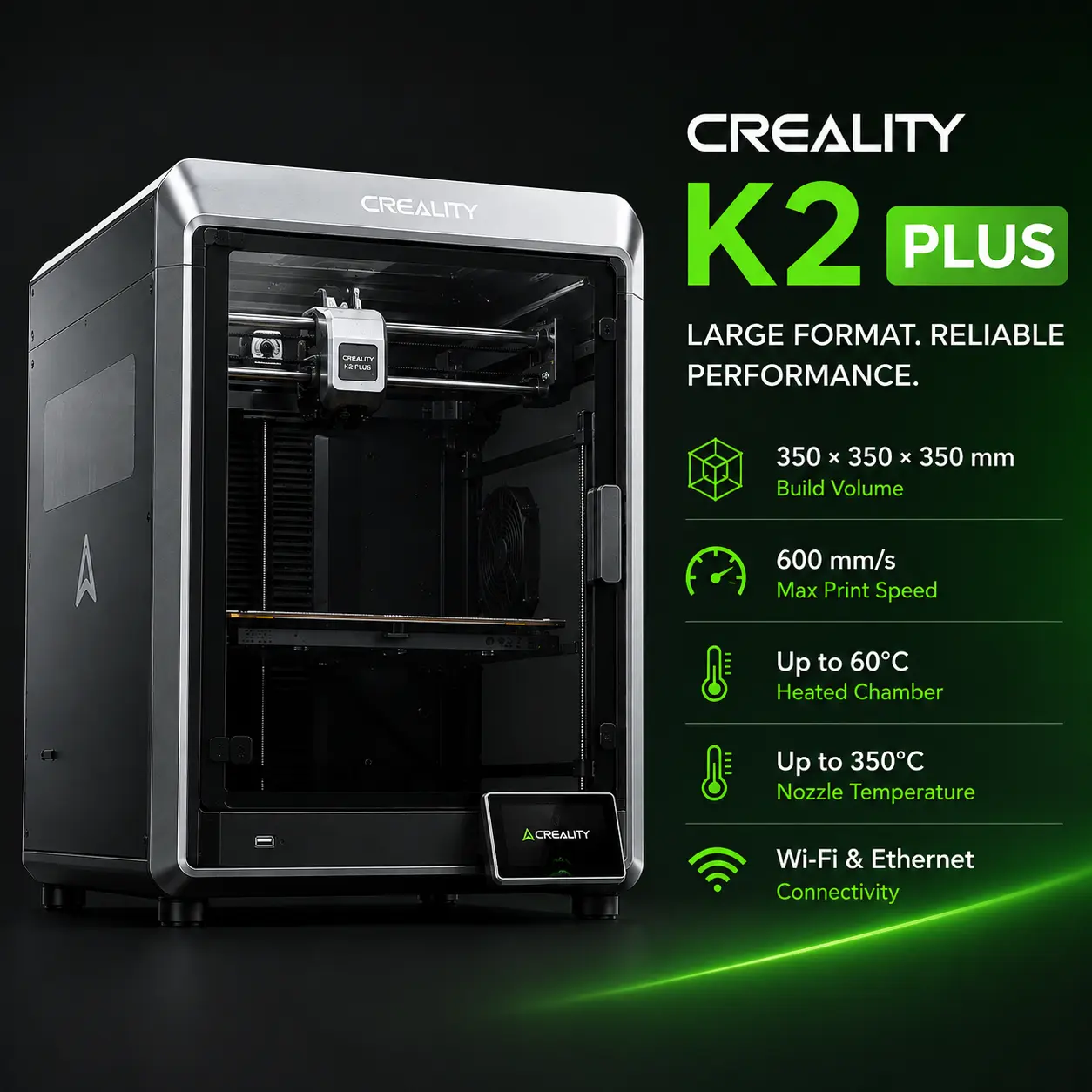
| Creality K2 Plus | 350 × 350 × 350 mm | 600 mm/s | 350°C / 120°C / 60°C | CFS, up to 16 colors | Large enclosed Creality ecosystem |
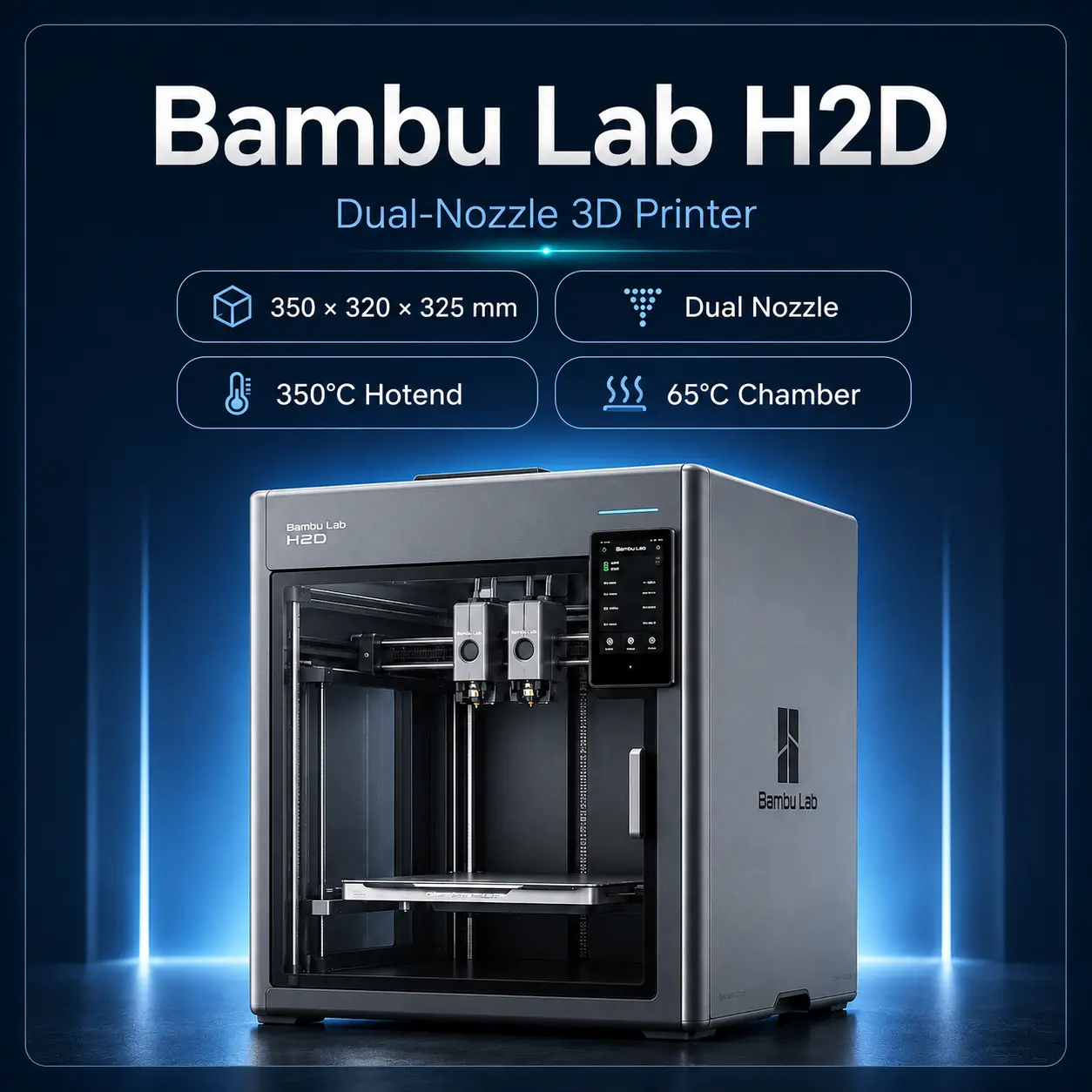
| Bambu Lab H2D | 325 × 320 × 325 mm single nozzle | 1,000 mm/s | 350°C / 120°C / 65°C | Dual nozzle + AMS ecosystem | Advanced automation and dual-nozzle printing |
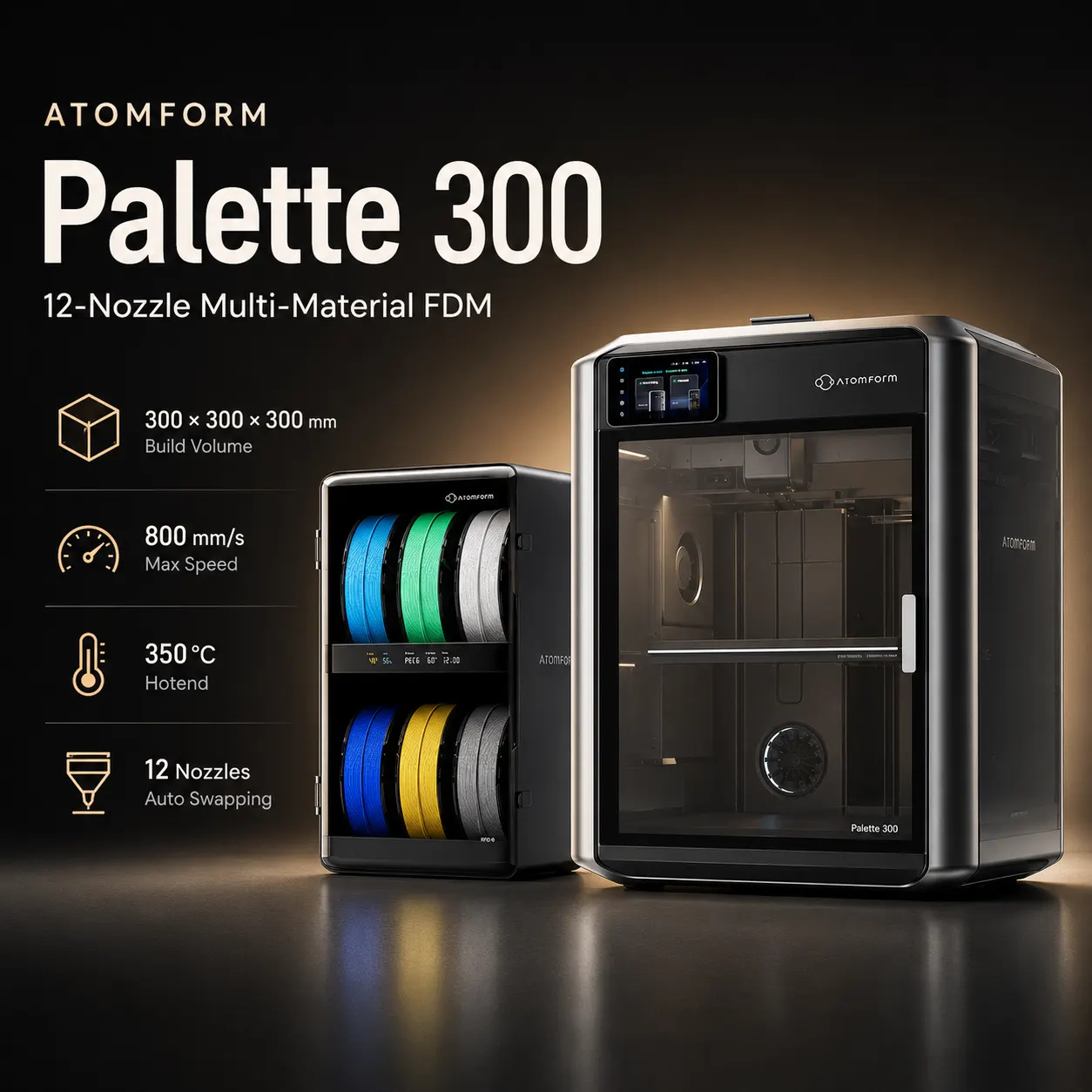
| Prusa XL+ | 360 × 360 × 360 mm | No single universal max published | 290°C standard / 120°C bed / optional enclosure | Up to 5 independent tools | Low-purge true tool changing |
The Max4 prioritizes large enclosed volume and high-temperature single-nozzle material capability. H2D and XL+ place more emphasis on independent material paths, while K2 Plus competes closely on large enclosed engineering use.
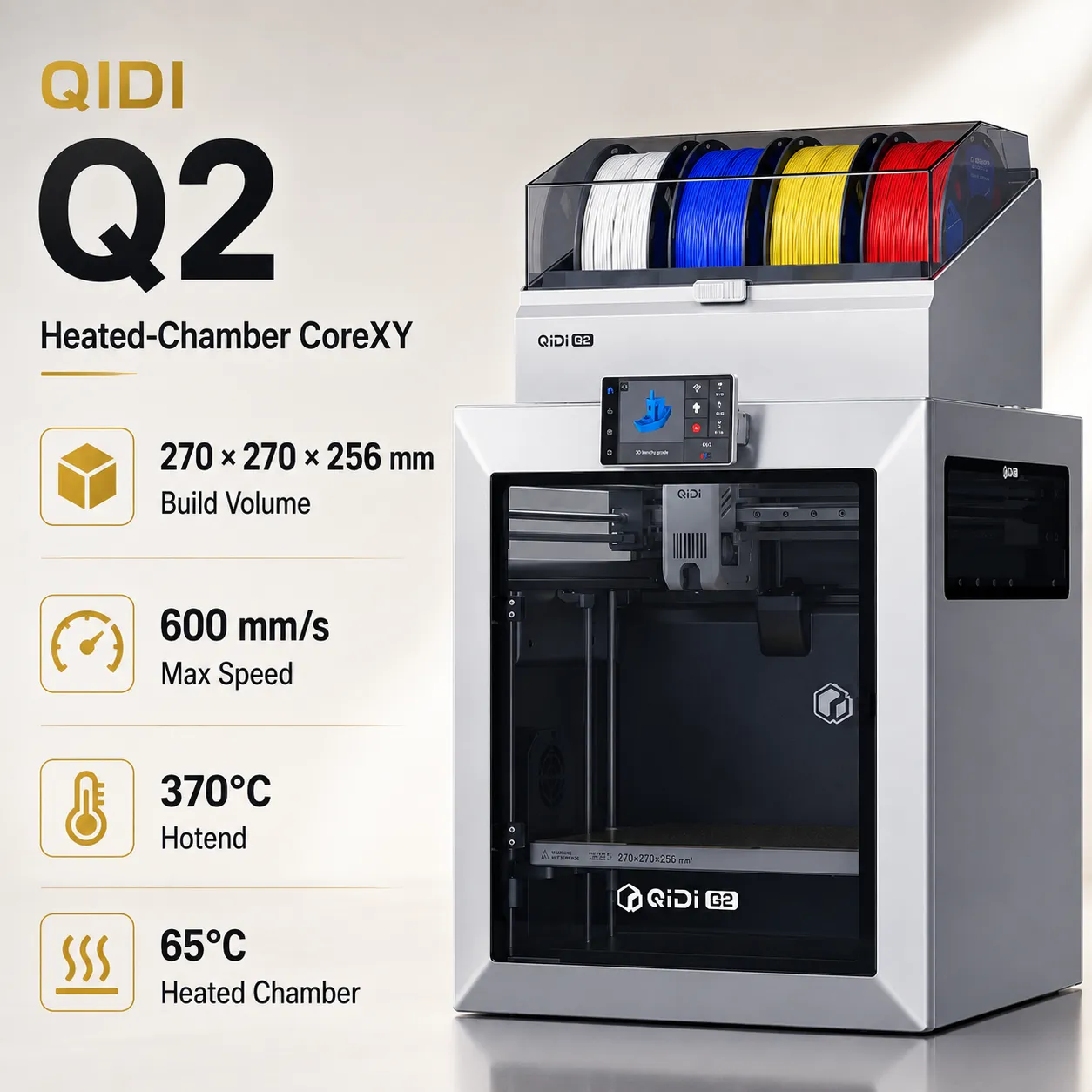
The QIDI Max4 vs QIDI Plus4 comparison is the clearest same-brand decision.
The Plus4 provides a 305 × 305 × 280 mm build volume, 600 mm/s maximum toolhead speed, 20,000 mm/s² acceleration, 370°C hotend, 120°C bed, and 65°C active chamber heating.
Max4 expands that to 390 × 390 × 340 mm, 800 mm/s maximum toolhead speed, 30,000 mm/s² acceleration, 40 mm³/s published flow, dual-band Wi-Fi, and the newer FOC closed-loop motion platform.
Both support QIDI Box.
Choose Plus4 when the smaller build volume is sufficient and lower purchase cost matters. Choose Max4 when large jigs, housings, production batches, or 390 mm-class engineering parts justify the larger footprint.
The QIDI Max4 vs Creality K2 Plus comparison is one of the closest large engineering-printer matchups.
The indexed Creality K2 Plus provides:
Max4 provides 40 mm more XY build area on each axis, a 370°C hotend, 65°C chamber, 800 mm/s maximum toolhead speed, and a QIDI engineering-material workflow.
K2 Plus is slightly taller at 350 mm Z and benefits from Creality's CFS ecosystem and broad retail/service presence.
Choose Max4 for maximum XY size, higher thermal ceiling, PPS-CF-oriented printing, and QIDI Box integration. Choose K2 Plus when Creality's ecosystem, 350 mm cubic proportions, and CFS workflow are stronger priorities.
The QIDI Max4 vs Bambu Lab H2D comparison is large single-nozzle engineering capacity versus advanced dual-nozzle automation.
The indexed Bambu Lab H2D provides:
Max4 has substantially more single-nozzle XY area, a hotter 370°C hotend, and a lower entry price. H2D counters with two independently controlled nozzles and the Bambu Studio/AMS ecosystem.
Choose Max4 for build area and thermal headroom. Choose H2D for independent dual-nozzle support materials and deeper automation.
The QIDI Max4 vs Prusa XL+ comparison is enclosed high-temperature processing versus independent-tool multi-material printing.
The indexed Prusa XL+ provides a 360 × 360 × 360 mm build volume and supports up to five independent toolheads.
XL+ is especially strong for soluble supports, different nozzle sizes, low-purge multi-material work, and rigid/flexible combinations.
Max4 offers more XY area, a 370°C hotend, and 65°C active chamber.
Choose XL+ for independent material paths and low purge waste. Choose Max4 for high-temperature chamber control, reinforced polymers, and large enclosed parts.
The QIDI Max4 currently starts from US$1,049 in USA through QIDI’s official store. That is approximately €898 in Europe, £768 in the UK, C$1,447 in Canada, A$1,476 in Australia, ₹100,435 in India, and AED 3,853 in the UAE. QIDI also operates regional stores, and the printer may be available through QIDI-authorized resellers and major marketplace channels, depending on the country.
Actual pricing can differ by region due to VAT or local taxes, shipping, import duties, exchange rates, and promotional discounts.
390 × 390 × 340 mm.
QIDI specifies up to 800 mm/s.
30,000 mm/s².
QIDI publishes up to 40 mm³/s.
370°C.
120°C.
Up to 65°C with independent active chamber heating.
Yes. QIDI explicitly lists PPS-CF in the current Max4 FAQ along with other carbon-fiber composites.
Yes. QIDI lists carbon- and glass-fiber-reinforced polymers among the supported material families.
A 0.4 mm bimetal nozzle. QIDI also lists 0.2, 0.6, and 0.8 mm options.
Yes. It uses a load-cell sensor integrated into the hotend for hands-free automatic leveling.
Yes. QIDI lists a camera up to 1080p with timelapse and AI detection.
Yes. The three-stage system uses a G3 pre-filter, H12 HEPA filter, and coconut-shell activated carbon.
The standard Max4 does not. QIDI Box is included only with relevant Combo/bundle configurations or purchased separately.
One box provides four channels. Up to four boxes can expand the system to 16 channels with the required accessories.
QIDI currently lists TPU 95A and generic TPU as unsupported through the Box even though the Max4 printer itself supports TPU.
Yes. It can dry while printing at up to 65°C.
2.4 GHz Wi-Fi, 5 GHz Wi-Fi, Ethernet, and USB.
QIDI recommends QIDI Studio and also lists OrcaSlicer and PrusaSlicer compatibility.
Max4 provides more XY area, a hotter 370°C nozzle, a 65°C chamber, and 800 mm/s maximum toolhead speed. K2 Plus has a 350 mm cubic volume and Creality CFS integration.
Max4 provides substantially more single-nozzle XY build area and a 370°C hotend. H2D provides dual nozzles, 1,000 mm/s maximum toolhead speed, and a more automated multi-material ecosystem.
The QIDI Max4 currently starts from US$1,049 in USA through QIDI’s official store