Vivid Quantum Dot HTPLAHeat-Treatable Creative PLAMulti-Color Specialty FilamentArtistic FDM FilamentPremium Decorative PLASmall-Batch Specialty HTPLA
PProtopasta
Protopasta
# Protopasta Quantum Dot HTPLA
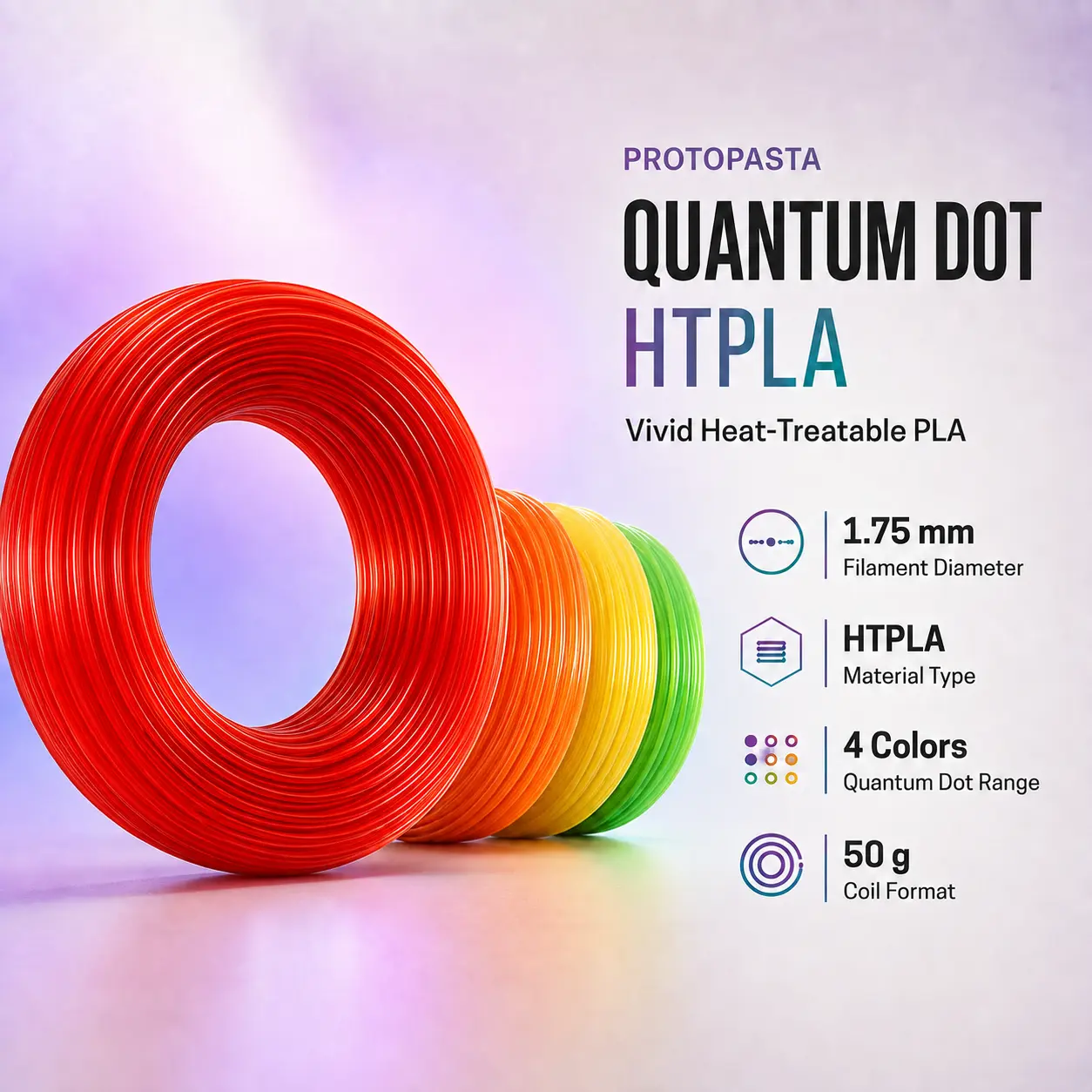
Protopasta Quantum Dot HTPLA is a 1.75 mm heat-treatable PLA family that uses quantum-dot additives to create an unusually strong fluorescent response under 365 nm blacklight / UV-A. The current range includes Red, Orange, Yellow, and Green Quantum Dot HTPLA.
The most important visual detail is that these filaments are nearly translucent with only faint coloration in ordinary light. Their red, orange, yellow, or green identity becomes dramatically stronger when excited by 365 nm UV-A, where Protopasta describes the effect as hyper-fluorescent. That makes Quantum Dot HTPLA better suited to illuminated displays, UV-reactive props, signs, indicators, art pieces, and layered color effects than to users simply looking for a saturated everyday PLA color.
The official TDS lists a heat-treatable PLA base, 0.04% InP-based quantum dots, density around 1.24 g/cm³, glass-transition onset near 60°C, and melt onset near 155°C. No Quantum Dot-specific HDT is published, so melt temperature should not be treated as a service-temperature rating.
For current product details, see Protopasta's Quantum Dot release article, Quantum Dot material-data entry, and HTPLA heat-treatment guide.
| Specification | Value |
|---|---|
| Material type | Heat-treatable PLA filament |
| Printing compatibility | FDM / FFF |
| Diameter | 1.75 mm |
| Formats | 50 g coil / 500 g spool / 1 kg spool |
| Colors | Red / Orange / Yellow / Green |
| Normal-light appearance | Mostly translucent with faint coloration |
| UV response | Hyper-fluorescent under 365 nm blacklight / UV-A |
| Quantum-dot additive | InP-based quantum dots, 0.04% in TDS |
| Density | Approx. 1.24 g/cm³ |
| Glass-transition onset | Approx. 60°C |
| Melt onset | Approx. 155°C |
| Nozzle temperature | 220–240°C |
| Bed temperature | 55–65°C |
| Print speed | 100–150 mm/s |
| Volumetric flow | 10–12 mm³/s |
| Extrusion width | 0.45 mm with 0.4 mm nozzle in TDS profile |
| Enclosure | Not required |
| Hardened nozzle | Not required solely for this formulation |
| Drying | Routine drying not recommended by Protopasta |
| Heat treatment | Supported through Protopasta HTPLA workflow |
Thermal note: The published ~155°C value is melt onset, not HDT or a guaranteed continuous-use temperature. Protopasta states that useful temperature limits depend on geometry, load, condition, and whether the part has been heat-treated.
The current Protopasta material-data table gives Quantum Dot PLA its own published process entry:
The Quantum Dot TDS expands this to:
Protopasta also reports printing the Quantum Dot materials on a Bambu P1S at 240°C nozzle, 55°C plate, and 12 mm³/s using a Generic PLA profile.
These are starting points rather than universal settings. Suitable indexed printers include the Bambu Lab A1, Bambu Lab A1 mini, Bambu Lab P2S, and Bambu Lab H2D.
Quantum dots fluoresce strongly when excited by the right wavelength. Protopasta keeps the base nearly translucent so the UV response dominates under blacklight.
A thin Quantum Dot layer can also be printed over a saturated base color, allowing the base to dominate in normal light while the overlay fluoresces under 365 nm UV-A. This suits hidden graphics, signage, sci-fi props, indicators, layered art, and dual-appearance models.
The current family consists of four Protopasta-exclusive variants:
All four are nearly translucent in normal light and show their strongest response under 365 nm illumination.
Quantum Dot HTPLA is built on Protopasta's heat-treatable PLA platform.
Protopasta's HTPLA guide uses approximately 95–120°C, commonly around 107°C, to increase crystallinity and thermal stability after printing.
Annealing can cause shrinkage, warping, Z change, and a more opaque appearance. Users buying Quantum Dot HTPLA mainly for its optical effect should test a sample before heat treating an important part.
The TDS does not provide a Quantum Dot-specific heat-deflection temperature. `heatDeflectionTempC` therefore remains unfilled rather than substituting glass transition or melt temperature for HDT.
Protopasta does not recommend routine drying of its PLA-based materials. If moisture-like symptoms appear, the Quantum Dot TDS suggests first adjusting speed and/or temperature.
Store filament and prints cool, dark, and dry because prolonged UV exposure can reduce fluorescence.
The TDS lists 0.04% InP-based quantum dots, and the SDS carries a California Proposition 65 warning for indium phosphide.
Protopasta advises users not to sand or intentionally generate dust. If dust-producing work is unavoidable, follow the SDS, use appropriate PPE, and provide good ventilation.
Protopasta states that most current 500 g and 1 kg 1.75 mm cardboard spools use a 200 mm outer diameter and work in Bambu AMS with the lid closed; both 200 mm and older 8-inch spools fit AMS Lite.
The 50 g coil is a sample coil rather than a normal AMS spool.
Quantum Dot HTPLA is fluorescent, not marketed as a persistent glow-in-the-dark filament.
Its main effect occurs while excited by 365 nm UV-A. Choose Quantum Dot HTPLA for on-demand blacklight fluorescence and translucent overlays; choose a glow-in-the-dark material when persistent afterglow is the goal.
| Material | Primary Focus | Published Print Profile | Thermal Positioning | Visual / Mechanical Advantage |
|---|---|---|---|---|
| Protopasta Quantum Dot HTPLA | 365 nm UV fluorescence + heat treatment | 220–240°C / 55–65°C / 100–150 mm/s | HTPLA; annealable | Hyper-fluorescent UV effect |
| Protopasta Opaque HTPLA | General heat-treatable PLA | PLA-style; HTPLA profile | Annealable HTPLA | Everyday opaque HTPLA colors |
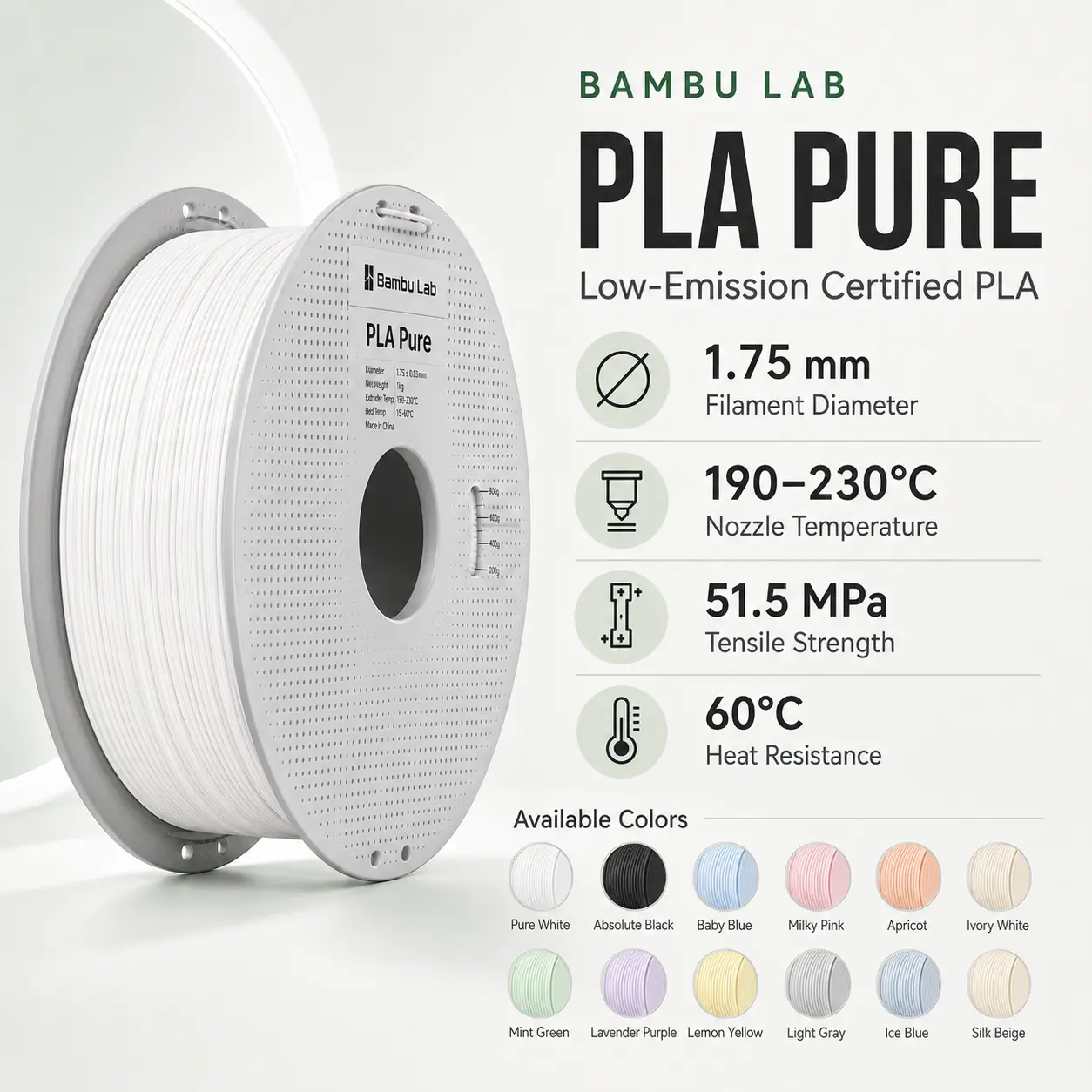
| Bambu Lab PLA Pure | Low-emission general PLA | Standard PLA workflow | Conventional PLA | Emissions / contact-safety documentation |
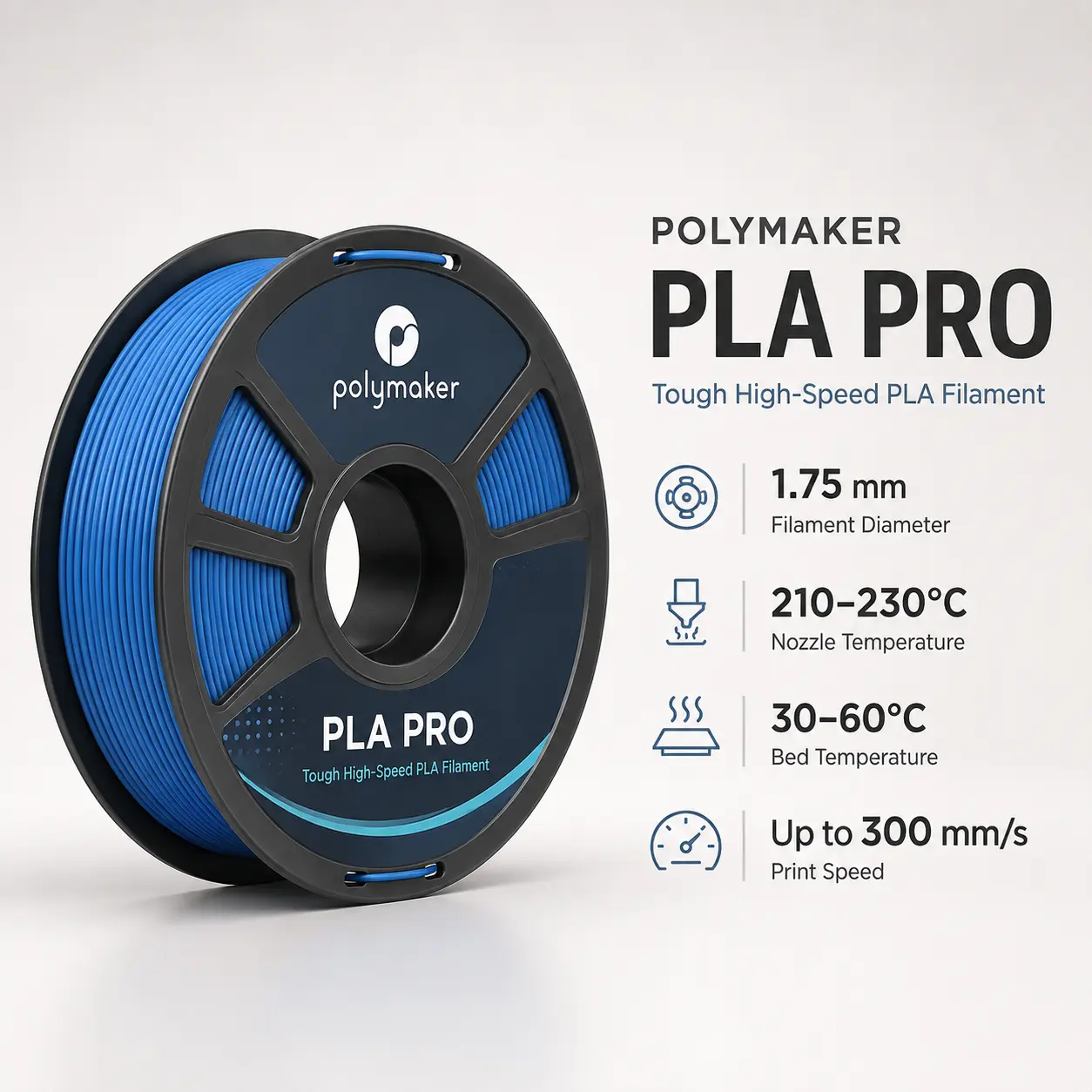
| Polymaker PLA Pro | Tough high-speed PLA | 210–230°C / 30–60°C / up to 300 mm/s | Conventional tough PLA | Impact resistance and throughput |
The materials solve different problems. Quantum Dot HTPLA is primarily an optical-effects filament with optional HTPLA annealing, while PLA Pure prioritizes documented emissions/contact testing and Polymaker PLA Pro prioritizes functional toughness and speed.
The Quantum Dot HTPLA vs standard Protopasta HTPLA comparison is mostly about optical behavior.
Protopasta Opaque HTPLA is designed as an everyday heat-treatable PLA with opaque color, stiffness, layer adhesion, and improved thermal stability after annealing.
Quantum Dot HTPLA is much more specialized. Its nearly translucent base and InP-based quantum-dot additive are designed to create exceptional fluorescence under 365 nm UV-A.
Choose standard HTPLA for ordinary functional or opaque-color parts where the blacklight effect adds no value.
Choose Quantum Dot HTPLA for UV-reactive displays, translucent overlays, props, indicators, and art where the optical response is the reason for selecting the filament.
The Quantum Dot HTPLA vs Bambu Lab PLA Pure comparison is specialty optical filament versus safety/documentation-focused everyday PLA.
Bambu Lab PLA Pure is designed around low printing emissions, a simplified formulation, easy Bambu profiles, and documented food-contact/toy-safety testing.
Quantum Dot HTPLA is chosen for a completely different reason: 365 nm fluorescence and the option to heat treat the PLA base.
Choose PLA Pure when low-emission documentation and ordinary indoor PLA use matter more.
Choose Quantum Dot HTPLA when the project needs a blacklight-reactive visual effect that conventional PLA does not provide.
The indexed Polymaker PLA Pro is a toughened PLA intended for functional parts and fast printing.
Polymaker validates PLA Pro up to 300 mm/s and publishes mechanical-property data for tensile, flexural, and impact performance.
Quantum Dot HTPLA's TDS does not publish comparable product-specific tensile or impact figures. Its value is the combination of HTPLA annealing and UV fluorescence rather than maximum mechanical performance.
Choose Quantum Dot HTPLA for creative UV-reactive parts.
Choose Polymaker PLA Pro for brackets, housings, fixtures, prototypes, and other functional prints where toughness and throughput matter more than blacklight appearance.
Quantum Dot HTPLA is currently sold in Red, Orange, Yellow, and Green.
Current official product pages show:
Availability can vary by color and spool size, and final pricing may differ by region, taxes, shipping, promotions, and exchange rates.
For regional reference, Quantum Dot HTPLA Price €5.14 in Europe, £4.41 in the United Kingdom, AED 22.03 in the UAE, C$8.31 in Canada, A$8.43 in Australia and ₹574 in India. The price of 500 g spool is approximately €34.28, £29.39, AED 146.85, C$55.39, A$56.20 and ₹3,823.
It is a heat-treatable PLA filament containing quantum-dot additives that fluoresce strongly under 365 nm blacklight.
Red, Orange, Yellow, and Green.
Protopasta describes it as nearly translucent with relatively faint coloration.
Protopasta demonstrates the brightest response with 365 nm blacklight / UV-A.
It is marketed as fluorescent under UV excitation, not as a persistent phosphorescent glow-in-the-dark filament.
The current TDS lists 220–240°C. Protopasta pairs 220°C with about 6 mm³/s and 240°C with about 12 mm³/s.
The TDS lists 55–65°C.
Protopasta publishes 100–150 mm/s and 10–12 mm³/s as the current Quantum Dot starting range.
Yes. It is based on heat-treatable PLA, but dimensional and appearance changes should be expected and tested.
Protopasta does not publish a Quantum Dot-specific HDT in the current TDS, so no HDT value should be inferred from Tg or melt temperature.
Yes. The SDS lists indium phosphide and carries a California Proposition 65 warning. Protopasta advises against sanding or generating dust.
Current official pages show US$6 for a 50 g coil and US$39.99 for a 500 g spool. For regional reference, US$6.00 is approximately €5.14 in Europe, £4.41 in the United Kingdom, AED 22.03 in the UAE, C$8.31 in Canada, A$8.43 in Australia, ₹574 in India.