High Flow NextruderLoad-Cell First Layer360° Cooling SystemMMU3 Multi Material ReadyOpen Upgradeable PlatformPrusaSlicer Optimized
PPrusa
Prusa
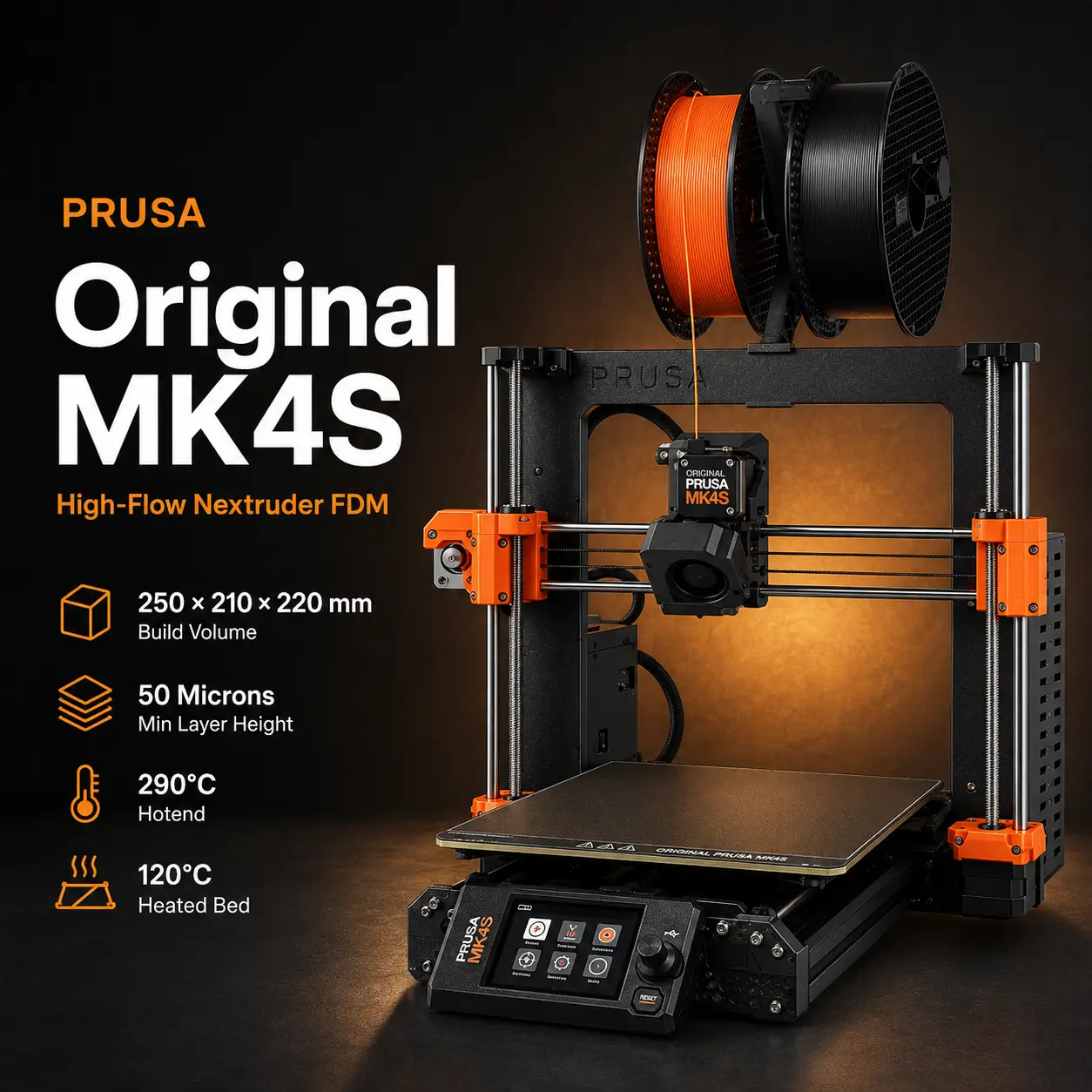
# Original Prusa MK4S
The Original Prusa MK4S is an open-frame Cartesian FDM/FFF printer focused on dependable print quality, straightforward maintenance, offline operation, and long-term upgradeability. It keeps the proven 250 × 210 × 220 mm MK4 platform while adding a 360° cooling system, a 0.4 mm high-flow Prusa brass CHT nozzle, updated firmware, and faster print profiles.
The MK4S uses Prusa's Nextruder direct-drive extruder with a 10:1 planetary gearbox and load-cell sensing for automatic first-layer calibration. The hotend reaches 290°C, the heatbed reaches 120°C, and the official layer-height range is 0.05–0.30 mm.
Prusa does not publish one universal maximum print speed for the MK4S. Its speed advantage comes from the high-flow CHT nozzle, Input Shaper, optimized profiles, and the redesigned part-cooling system rather than a single headline mm/s number.
The printer supports common materials such as PLA, PETG, Flex/TPU, PVA, PC, PP, CPE, and PVB directly. Prusa recommends its optional enclosure for ABS, ASA, HIPS, PA and other materials that benefit from a more stable thermal environment. Abrasive carbon-filled filaments require a suitable wear-resistant nozzle rather than the standard brass CHT nozzle.
For current specifications and ordering, see the official Original Prusa MK4S product page. For multi-material printing, see the official MMU3 upgrade.
| Specification | Value |
|---|---|
| Printing technology | FDM / FFF |
| Motion style | Open-frame Cartesian / bedslinger |
| Build volume | 250 × 210 × 220 mm |
| Layer height | 0.05–0.30 mm |
| Standard nozzle | 0.4 mm high-flow Prusa brass CHT |
| Maximum nozzle temperature | 290°C |
| Maximum bed temperature | 120°C |
| Extruder | Nextruder direct drive |
| Drive system | 10:1 planetary gearbox |
| Filament path | All-metal |
| Cooling | 360° high-performance turbine cooling |
| Build surface | Magnetic heatbed with removable PEI spring-steel sheet |
| Bed leveling | Automatic mesh leveling with load-cell sensing |
| Input Shaper | Yes |
| Display | 3.5-inch color LCD |
| Connectivity | Ethernet, removable Wi-Fi module, NFC, USB |
| Remote management | Prusa Connect / Prusa mobile app |
| Offline printing | Yes |
| Mainboard | 32-bit xBuddy |
| X/Y motors | 0.9° stepper motors |
| Printer dimensions | 500 × 550 × 400 mm without spool |
| Printer weight | 7 kg |
| PSU | 240 W Delta PSU with Power Panic hardware |
| Typical consumption | Approx. 80 W PLA / 120 W ABS settings |
| Multi-material option | MMU3, up to five filaments |
| Enclosure | Optional passive Original Prusa Enclosure |
Prusa does not publish one simple maximum print-speed figure in the main MK4S specification table. Real speed depends on nozzle, filament, profile, geometry, layer height, and required surface quality.
The Original Prusa MK4S vs MK4 comparison is mainly about cooling, extrusion flow, firmware, and quality-of-life improvements rather than a completely new motion platform.
Prusa lists the principal MK4S changes as:
The MK4S keeps the same 250 × 210 × 220 mm build volume and Nextruder architecture, so MK4 owners gained a clear hardware upgrade path without replacing the entire printer.
For buyers choosing today, the MK4S is the more refined version and the better reference point for current Prusa open-frame printing.
The standard MK4S nozzle is a 0.4 mm Prusa brass CHT high-flow nozzle.
CHT, or Core Heating Technology, splits the filament flow inside the nozzle so heat reaches more of the filament cross-section. The goal is higher melt capacity without simply raising temperature.
This helps the MK4S maintain extrusion flow at faster profile speeds and is a major reason Prusa improved print times without publishing an unusually high motion-speed headline.
The brass CHT nozzle is not intended for long-term abrasive carbon- or glass-fiber use. A hardened or otherwise wear-resistant nozzle should be fitted for filled composites.
The MK4S redesign introduced a high-performance turbine fan and a 360° cooling duct around the nozzle.
Prusa demonstrates overhangs up to 75° without supports under its test conditions. Real results depend on material, orientation, layer height, speed, and model geometry, so this should be treated as a demonstrated manufacturer capability rather than a guarantee for every model.
The stronger cooling is also helpful for PLA and flexible materials, where clean overhangs can reduce the need for difficult-to-remove support structures.
The Nextruder combines direct-drive extrusion, a 10:1 planetary gearbox, and an integrated load cell.
During calibration, the nozzle touches the build surface directly. Because the sensing point is the nozzle itself, there is no separate probe-to-nozzle XY offset.
This allows automatic mesh bed leveling and first-layer calibration while keeping the filament path compact for flexible materials.
Automatic calibration still depends on a clean sheet, correct material profile, and normal mechanical maintenance.
Prusa's current MK4S specification table lists the following materials directly:
With the Original Prusa Enclosure and filtration add-on, Prusa also lists:
Useful compatible materials for MK4S-class printing include Prusament PETG, Prusament TPU 95A, Prusament ASA, and Prusament PC Blend Carbon Fiber.
The printer can process carbon-filled materials when the filament temperature requirements fit the MK4S hardware, but abrasive fibers require a wear-resistant nozzle.
Prusament PC Blend Carbon Fiber is within the MK4S hotend temperature range, and Prusa states that the material itself does not require an enclosure, but a hardened nozzle is mandatory because the carbon fibers are abrasive.
The MK4S is open-frame by default.
The Original Prusa MK4/S Enclosure is passively heated by the printer rather than using an independent chamber heater.
Prusa publishes an enclosure temperature of up to about 45°C in its printer comparison material. The enclosure is most useful for ABS, ASA, PA/Nylon, PC and similar materials that benefit from reduced drafts and a more stable ambient temperature.
Optional advanced filtration is also available.
The optional MMU3 gives MK4S up to five filament inputs through one hotend.
Prusa currently states 25–35 seconds per filament change in its workflow and promotes lower waste than many other single-nozzle systems.
Prusa specifically recommends the standard-flow 0.4 mm nozzle for the best MMU3 material efficiency.
The high-flow CHT nozzle works with MMU3, but its larger melt volume can require more flushing for clean color transitions. Prusa therefore includes a standard nozzle with standalone MK4S MMU3 kits and supplies both nozzle types in relevant bundles.
This distinction matters for buyers comparing Prusa MK4S MMU3 vs Bambu AMS lite or other single-nozzle color systems.
MK4S supports Ethernet, the removable ESP Wi-Fi module, NFC-assisted setup, USB printing, Prusa Connect and the Prusa mobile app.
Prusa also supports fully offline setup and operation. The Wi-Fi module can be physically removed when network access is undesirable.
That makes MK4S particularly relevant to schools, laboratories, engineering teams and businesses with tighter network or intellectual-property requirements.
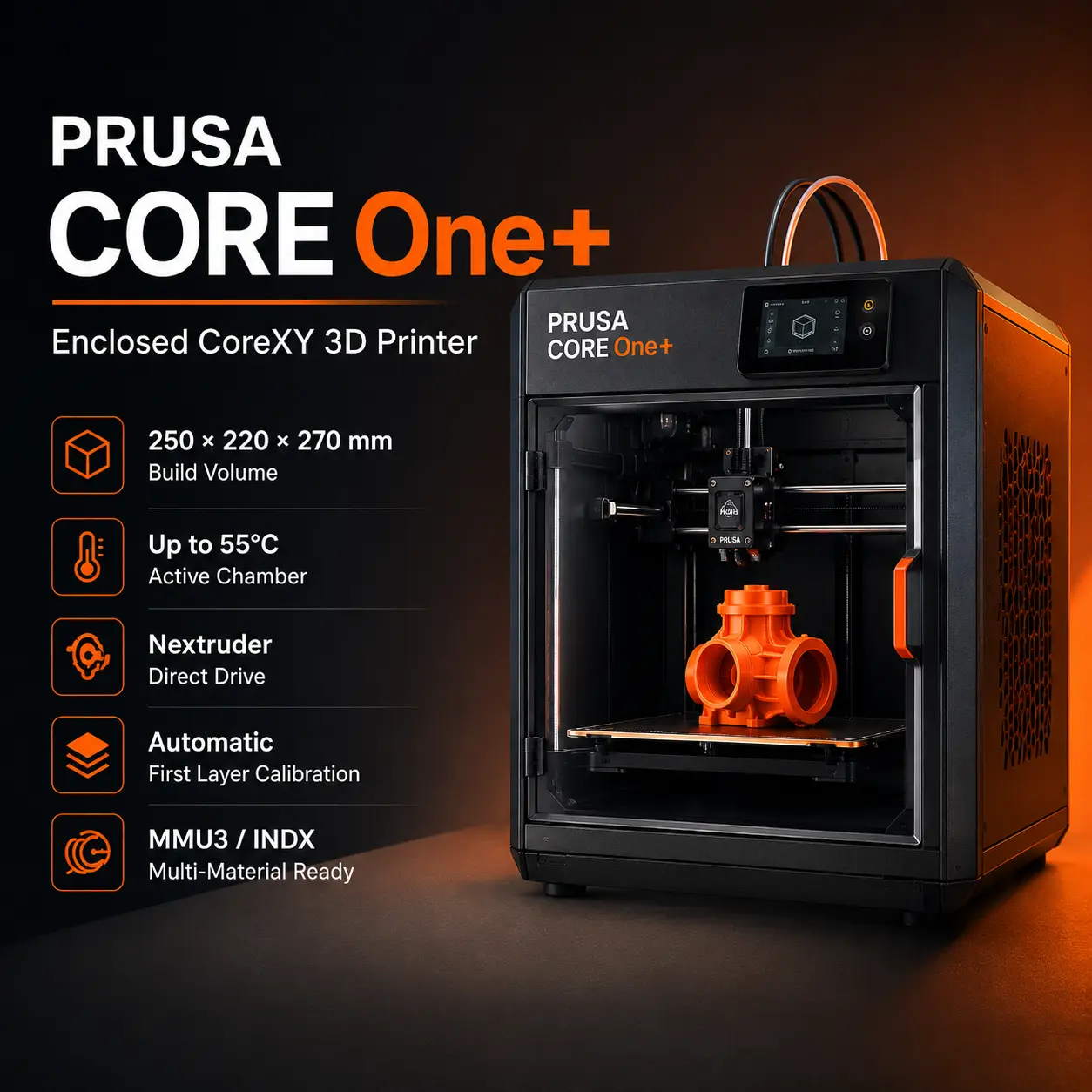
Prusa sells an official MK4S to Prusa CORE One+ conversion kit, allowing owners to reuse many existing components while moving to a fully enclosed CoreXY platform.
The resulting CORE One+ adds:
See the indexed Prusa CORE One+ for the finished platform.
| Printer | Build Volume | Design | Nozzle / Bed | Chamber | Multi-Material | Main Strength |
|---|---|---|---|---|---|---|
| Original Prusa MK4S | 250 × 210 × 220 mm | Open Cartesian | 290°C / 120°C | Optional passive enclosure | MMU3, up to 5 | Repairability, print quality, upgrade path |
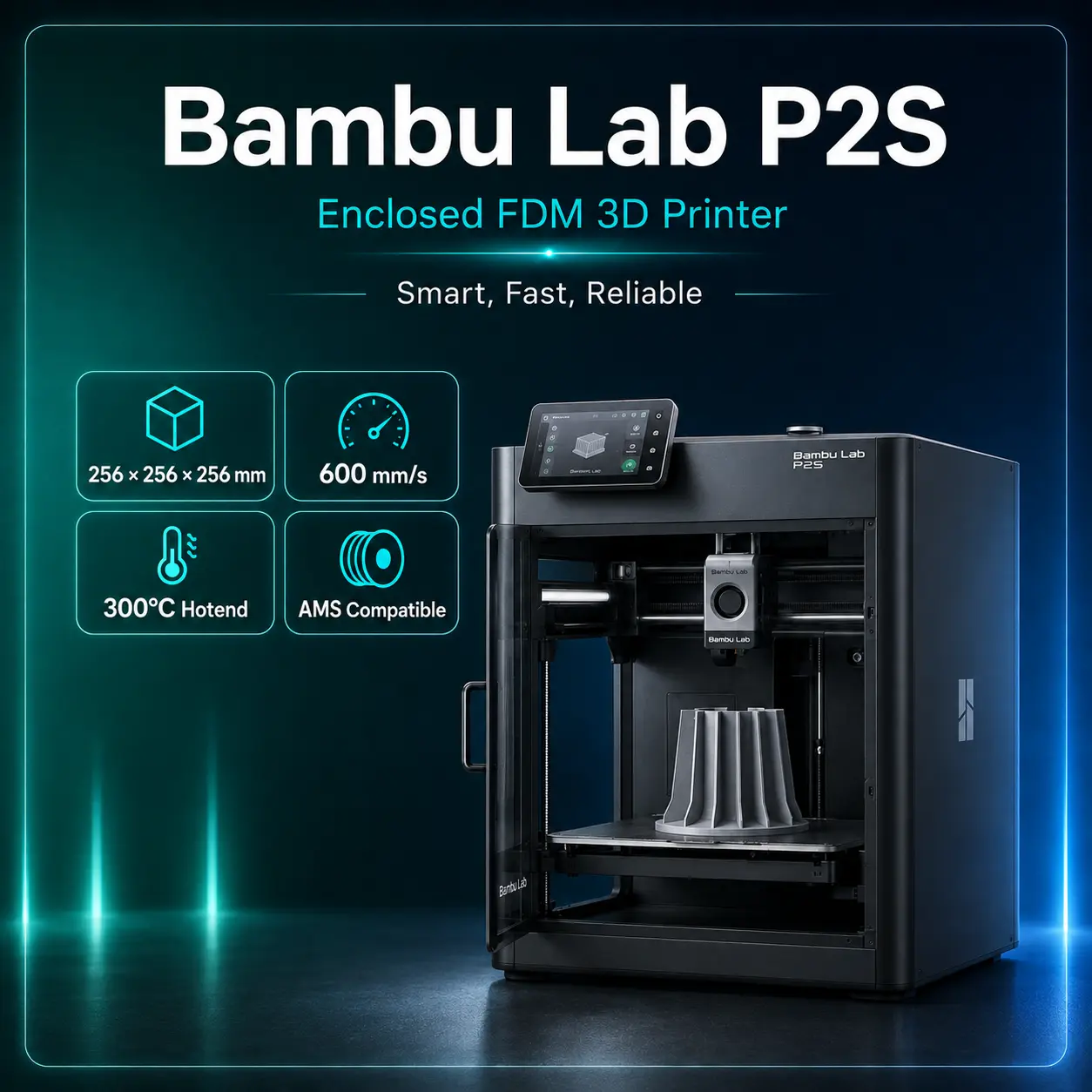
| Bambu Lab A1 | 256 × 256 × 256 mm | Open Cartesian | 300°C / 100°C | No | AMS lite, 4 colors | Automation and larger build volume |
| Prusa CORE One+ | 250 × 220 × 270 mm | Enclosed CoreXY | 290°C / 120°C | 55°C active control | MMU3 / INDX paths | Enclosed Prusa engineering platform |
| Bambu Lab P2S | 256 × 256 × 256 mm | Enclosed CoreXY | 300°C / 110°C | Enclosed | AMS ecosystem | Enclosed automation and engineering materials |
The MK4S is not the obvious choice for maximum build volume or headline motion speed. Its case is stronger around maintenance access, open-source software and firmware, offline operation, tuned Prusa profiles, MMU3 support, and the ability to convert to a CORE One+ later.
The Original Prusa MK4S vs Bambu Lab A1 comparison is one of the most common open-frame desktop choices.
The Bambu Lab A1 offers a 256 × 256 × 256 mm build volume, 500 mm/s maximum toolhead speed, 300°C hotend, 100°C bed, automatic calibration, active flow-rate compensation, and optional four-color AMS lite.
MK4S has a smaller build volume but a hotter 120°C bed, the Nextruder load-cell system, a high-flow CHT nozzle, Ethernet, full offline operation, and an open upgrade/repair ecosystem.
For multi-color printing, A1 uses AMS lite with up to four filaments, while MK4S MMU3 handles up to five.
Choose Bambu Lab A1 when larger build volume, streamlined automation, and the Bambu ecosystem are the priority.
Choose MK4S when repairability, PrusaSlicer, offline operation, Ethernet, MMU3, flexible-material handling, and long-term upgradeability matter more.
The MK4S vs Prusa CORE One+ decision is mainly open-frame simplicity versus enclosed CoreXY capability.
The Prusa CORE One+ provides a 250 × 220 × 270 mm build volume, active chamber control up to 55°C, and an enclosed CoreXY architecture.
Both use the Nextruder family, a 290°C hotend, 120°C bed, load-cell first-layer calibration, Input Shaper, Ethernet, Wi-Fi and the wider Prusa ecosystem.
MK4S is easier to access mechanically and remains the lower-cost entry point. CORE One+ is better for ABS, ASA, Nylon and other materials that benefit from an actively controlled enclosure.
The Original Prusa MK4S vs Bambu Lab P2S comparison separates an open, highly serviceable Cartesian printer from a newer enclosed CoreXY platform.
The Bambu Lab P2S offers a 256 × 256 × 256 mm build volume, 300°C nozzle, 110°C bed, higher headline motion speed, an enclosure, integrated camera monitoring, and the Bambu AMS ecosystem.
MK4S counters with a 120°C bed, a simpler open mechanical layout, Prusa's Nextruder and CHT system, extensive offline operation, Ethernet, open-source firmware/software, and direct conversion to CORE One+.
Choose P2S when enclosure-based engineering-material printing and Bambu automation are priorities.
Choose MK4S when serviceability, openness, local control, and upgradeability matter more than an enclosed CoreXY chassis.
For buyers comparing Prusa MK4S vs MK4, the newer MK4S is not a different size class; it is the refined version of the same core platform.
Its main improvements are 360° cooling, the standard high-flow CHT nozzle, faster tuned profiles, improved overhang performance, native Prusa mobile-app support, NFC-assisted setup, and updated parts.
Existing MK4 owners could upgrade rather than replace the printer, which reflects Prusa's long-term platform strategy.
Prusa currently lists the Original Prusa MK4S kit from US$729, approximately €629 in Europe, £538 in the UK, C$1,013 in Canada, A$1,030 in Australia, ₹69,772 in India, and AED 2,677 in the UAE. The assembled version is priced higher. Actual prices may differ by region due to VAT or local taxes, import duties, exchange rates, shipping costs, availability, and promotions.
250 × 210 × 220 mm.
0.05–0.30 mm.
A 0.4 mm high-flow Prusa brass CHT nozzle.
290°C.
120°C.
Yes. The Nextruder load cell probes the build surface directly for automatic mesh leveling and first-layer setup.
Prusa does not publish one universal maximum mm/s figure. Speed depends on profile, nozzle, filament, model and quality target.
Yes. The direct-drive Nextruder supports flexible filament.
Yes, when the material fits the thermal limits and a suitable wear-resistant nozzle is installed.
Prusa lists ABS and ASA with the Original Prusa Enclosure and filtration configuration.
Yes. MMU3 handles up to five filaments.
It works, but Prusa recommends the standard-flow nozzle for the best material efficiency.
Yes. Prusa supports fully offline operation.
Yes. Prusa sells an official MK4S-to-CORE One+ conversion kit.
Prusa currently lists the Original Prusa MK4S kit from US$729 — about €629, £538, C$1,013, A$1,030, ₹69,772, or AED 2,677. Regional pricing may vary with taxes, import duties, shipping, exchange rates, availability, and promotions.