High Temperature Heated ChamberActive Chamber HeatingCarbon Fiber ReadyAdvanced Material 3D PrintingReinforced Filament PrintingLarge Engineering Part Production
QQIDI
QIDI
# QIDI Plus4
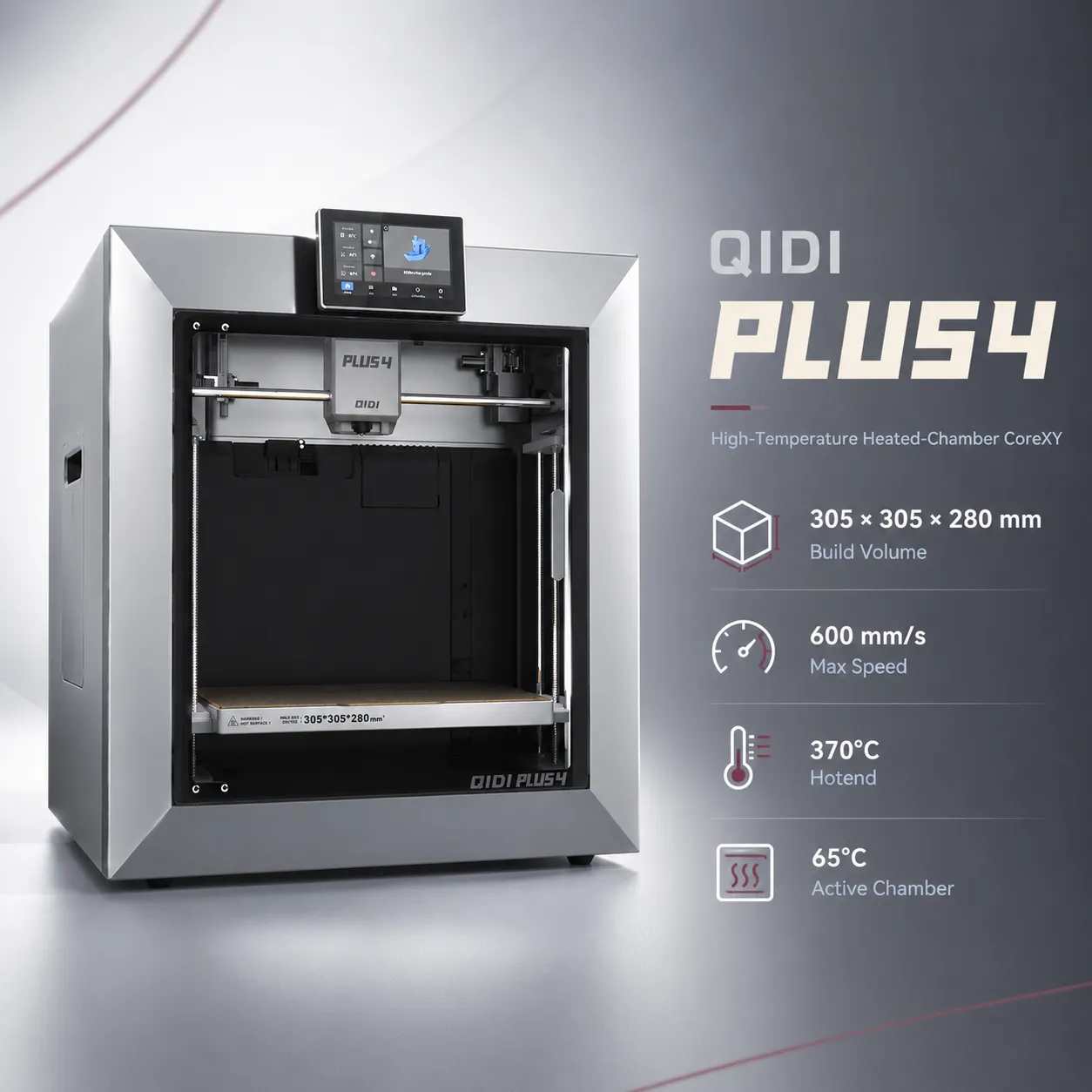
QIDI Plus4 is an enclosed CoreXY 3D printer aimed at engineering prototypes, tooling, functional parts, and small-batch production. Its 305 × 305 × 280 mm build volume provides more room than typical 250–260 mm desktop platforms while keeping the machine within a workshop-friendly footprint.
The main reason to consider the Plus4 is its thermal capability. QIDI specifies a 370°C hotend, 120°C heated bed, and 65°C independently heated chamber, giving the printer useful headroom for ABS, ASA, PC, PA, carbon- and glass-fiber-reinforced polymers, and higher-temperature materials such as PPA-CF/GF and PPS-CF.
QIDI also publishes a 600 mm/s maximum toolhead speed and acceleration up to 20,000 mm/s². That 600 mm/s figure is a motion-system limit, not a universal maximum printing speed, so this listing does not use it as `maxPrintSpeedMmS`.
The current Plus4 is compatible with the QIDI BOX multi-filament system. QIDI now sells Plus4 Combo configurations with the BOX included, and the current BOX ecosystem supports expansion to as many as 16 colors with additional boxes and accessories.
For current pricing and specifications, see the official QIDI Plus4 product page, the official Plus4 technical specifications, and the QIDI Plus4 documentation center.
| Specification | Value |
|---|---|
| Printing technology | FDM / FFF |
| Motion system | CoreXY |
| Build volume | 305 × 305 × 280 mm |
| Standard nozzle | 0.4 mm bimetal nozzle |
| Optional nozzle sizes | 0.2, 0.6, 0.8 mm |
| Maximum hotend temperature | 370°C |
| Maximum heated-bed temperature | 120°C |
| Maximum chamber temperature | 65°C |
| Chamber heating | Independent PTC heating |
| Chamber heater power | 400 W |
| Maximum toolhead speed | 600 mm/s |
| Maximum acceleration | 20,000 mm/s² |
| Extruder | Direct drive with hardened-steel gears |
| Build surface | Dual-sided textured PEI plate |
| Bed structure | 6 mm aluminum substrate |
| XY belts | 9 mm 1.5GT |
| Z axis | Dual independent lead-screw motors |
| Leveling | Hands-free automatic leveling |
| Motion compensation | Input Shaping |
| Filament detection | Tangle detection + Hall runout sensor |
| Camera | Low-framerate camera, up to 1080p |
| Timelapse | Supported |
| Filtration | Activated-carbon chamber filter |
| Storage | 32 GB eMMC + USB 2.0 flash drive |
| Connectivity | 2.4 GHz Wi-Fi, Ethernet, USB |
| Electrical input | 100–240 VAC, 50/60 Hz |
| Rated power | 450 W printer + 400 W chamber heating |
| Display | 5-inch 800 × 480 touchscreen |
| Printer dimensions | 505 × 487 × 550 mm |
| Net weight | 27 kg |
| Filament diameter | 1.75 mm |
| Slicer | QIDI Studio; OrcaSlicer and PrusaSlicer supported |
| Slicing input formats | STL, OBJ, 3MF, STEP, STP |
The Plus4 uses QIDI's second-generation active chamber-heating system.
QIDI specifies:
This is a meaningful advantage over printers that are enclosed but depend entirely on passive heat from the bed and nozzle.
A warmer, more stable chamber helps reduce thermal gradients in larger engineering parts made from ABS, ASA, PC, PA / Nylon, PA-CF / PA-GF, PPA-CF / PPA-GF, and PPS-CF.
For an indexed material example, Prusament ASA benefits from a controlled, draft-resistant environment on larger parts.
Active chamber heating does not remove the need for material drying, suitable bed preparation, correct part orientation, and material-specific profiles.
QIDI specifies a 370°C maximum printhead temperature and a second-generation 80 W hotend.
The stock extrusion system uses a 0.4 mm bimetal nozzle, hardened-steel direct-drive extruder gears, an integrated hotend/nozzle design, and dedicated hotend cooling.
QIDI also offers optional 0.2, 0.6, and 0.8 mm nozzles.
The current product page highlights the upgraded multi-metal nozzle with a hardened tip for fiber-filled materials and identifies PPS-CF as a supported high-temperature example.
For frequent abrasive-material printing, nozzle condition should still be treated as a consumable process variable.
Related indexed materials include Prusament PA11 Carbon Fiber and Prusament PC Blend Carbon Fiber. Their individual temperature, drying, and bed-surface requirements should be checked before use.
QIDI currently lists common filaments including PLA, PETG, TPU, PVA, and HIPS, plus engineering and high-temperature materials such as ABS, ASA, PC, PA / Nylon, PA-CF/GF, PET-CF/GF, PPA-CF/GF, and PPS-CF.
The broader technical-specification page also describes support for carbon- and glass-fiber-reinforced polymers generally.
This material range is one of the Plus4's strongest selling points, but high nozzle temperature alone is not enough. Moisture-sensitive nylons and PPA compounds require disciplined drying, while large ABS/ASA/PC parts benefit from appropriate chamber settings and adhesion strategy.
For printer comparisons focused specifically on composites, see Best 3D Printers for Carbon-Fiber Materials in 2026.
The Plus4 uses CoreXY kinematics with 9 mm 1.5GT belts.
QIDI also specifies dual independent Z-axis lead-screw motors, 10 mm high-hardness linear shafts, a 6 mm aluminum bed substrate, up to 20,000 mm/s² acceleration, and Input Shaping.
The motion system is rated for 600 mm/s maximum toolhead speed.
Real printing speed is usually lower because it is limited by material flow, layer height, nozzle size, geometry, cooling, and desired finish.
For large engineering parts, thermal stability and consistent extrusion are often more important than reaching the motion system's absolute speed ceiling.
The Plus4 uses hands-free automatic leveling to reduce manual bed-adjustment work.
QIDI also specifies:
These functions are particularly useful for longer engineering jobs where a spool problem or power interruption could otherwise waste many hours of printing.
Automatic calibration still works best alongside a clean build surface, a healthy nozzle, suitable filament, and correct material profiles.
The Plus4 is compatible with the current QIDI BOX automatic filament-management system.
QIDI now sells base Plus4 configurations, Plus4 Combo configurations with QIDI BOX, Plus4-specific BOX upgrade hardware, and expansion kits for larger multi-color arrangements.
The current QIDI BOX supports up to 16 colors when additional QIDI BOX units and the required expansion hardware are used.
The standard Plus4 should therefore be described as QIDI BOX compatible, not as a multi-color printer with the BOX included.
QIDI BOX also provides heated filament storage/drying and automated feeding, which can be useful for moisture-sensitive engineering materials.
The Plus4 remains a single-nozzle printer, however. Color or material changes still require the nozzle to transition between filaments, so multi-color jobs can create purge waste.
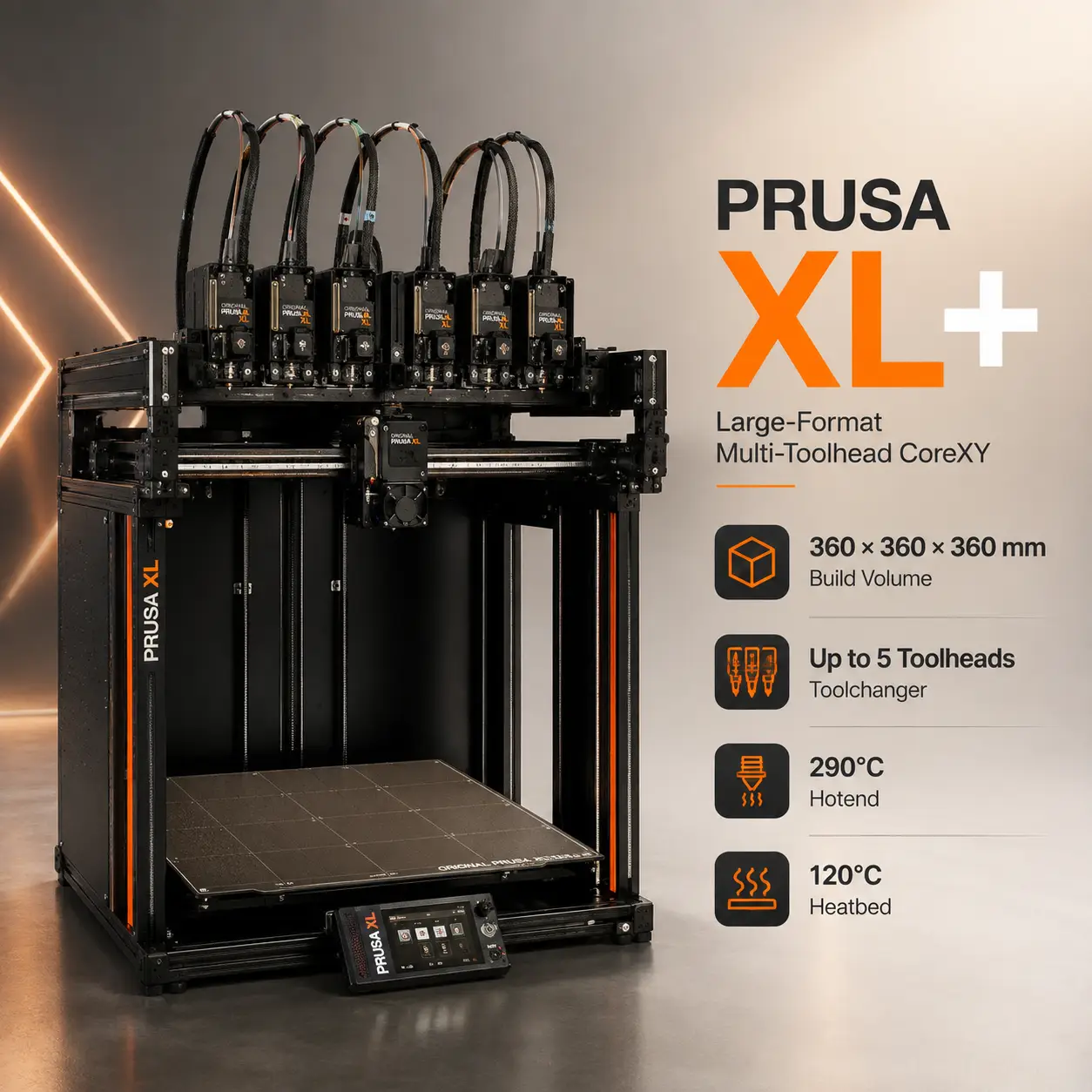
For users prioritizing independent nozzles and lower purge waste, the Prusa XL+ uses a different active-toolchanger architecture.
QIDI specifies a low-framerate camera capable of up to 1080p.
It supports remote visual monitoring and timelapse recording.
The wording matters: "up to 1080p" describes image resolution, not a high-frame-rate 1080p video system.
The camera is best treated as a print-monitoring and timelapse tool rather than a high-speed machine-vision system.
The Plus4 supports:
QIDI recommends QIDI Studio and also lists third-party compatibility including OrcaSlicer and PrusaSlicer.
The Plus4 runs a Klipper-based control system and supports networked and local workflows. QIDI also describes wired or wireless operation with remote cloud access or secure LAN-only control.
The chamber circulation system includes an activated-carbon air filter.
This can reduce odors and some volatile compounds, but it should not be treated as a substitute for appropriate room ventilation.
Materials such as ABS and ASA can produce emissions during printing. Follow the filament manufacturer's safety guidance and local workplace requirements.
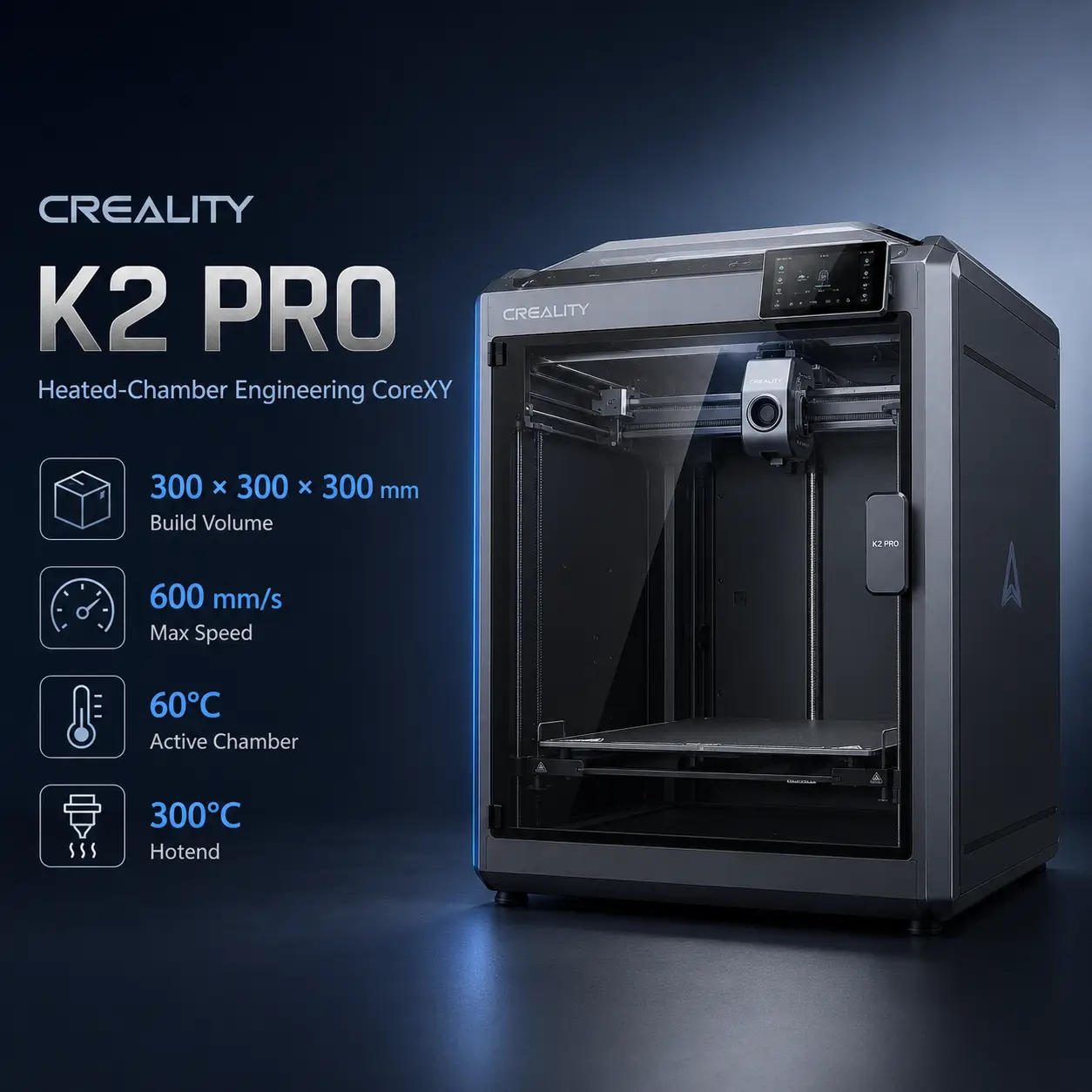
The Creality K2 Plus is a larger enclosed engineering platform.
Plus4 is attractive when:
K2 Plus provides a substantially larger build envelope and a different automation/multi-color ecosystem.
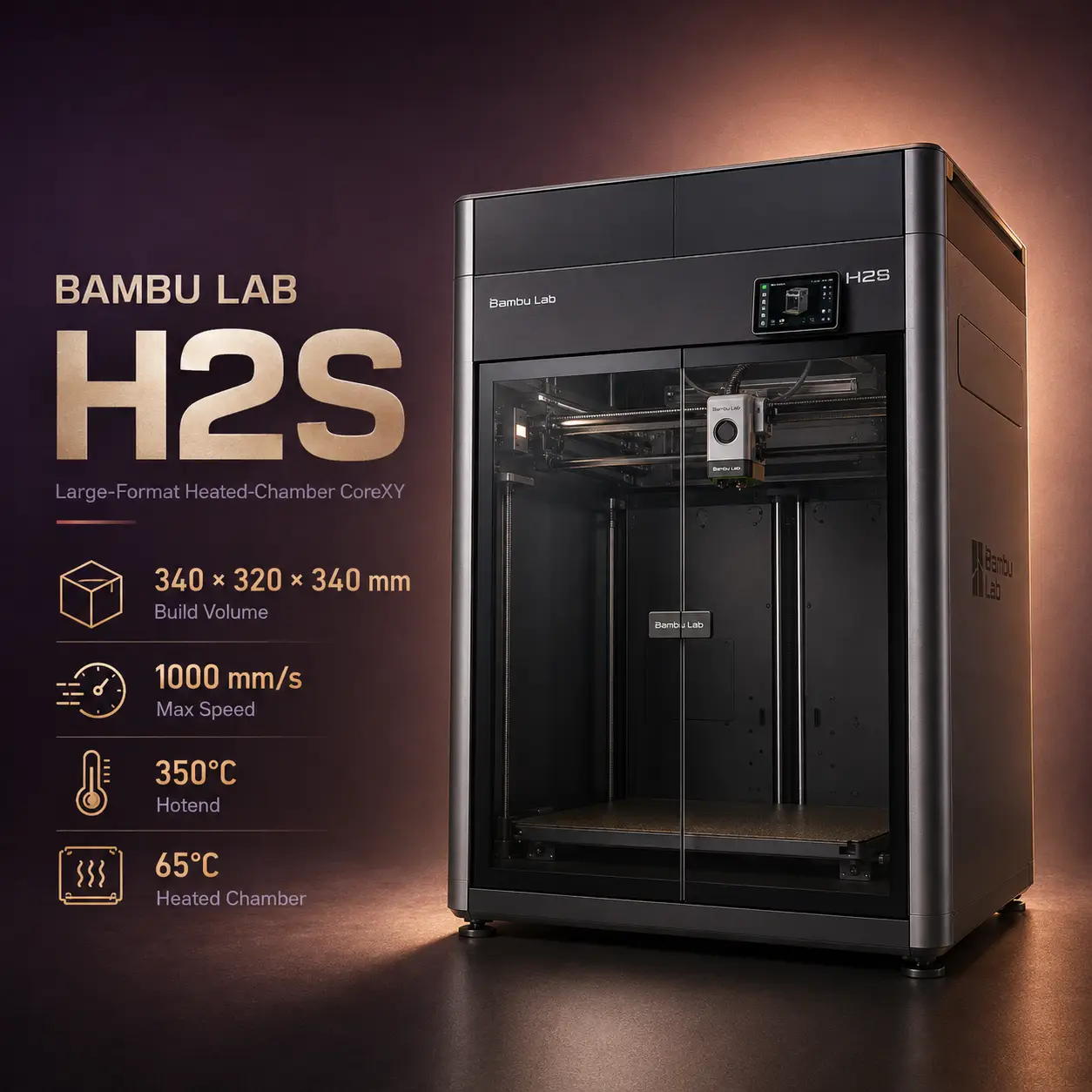
The Bambu Lab H2D is another engineering-focused enclosed platform but uses a dual-nozzle architecture and a different automation ecosystem.
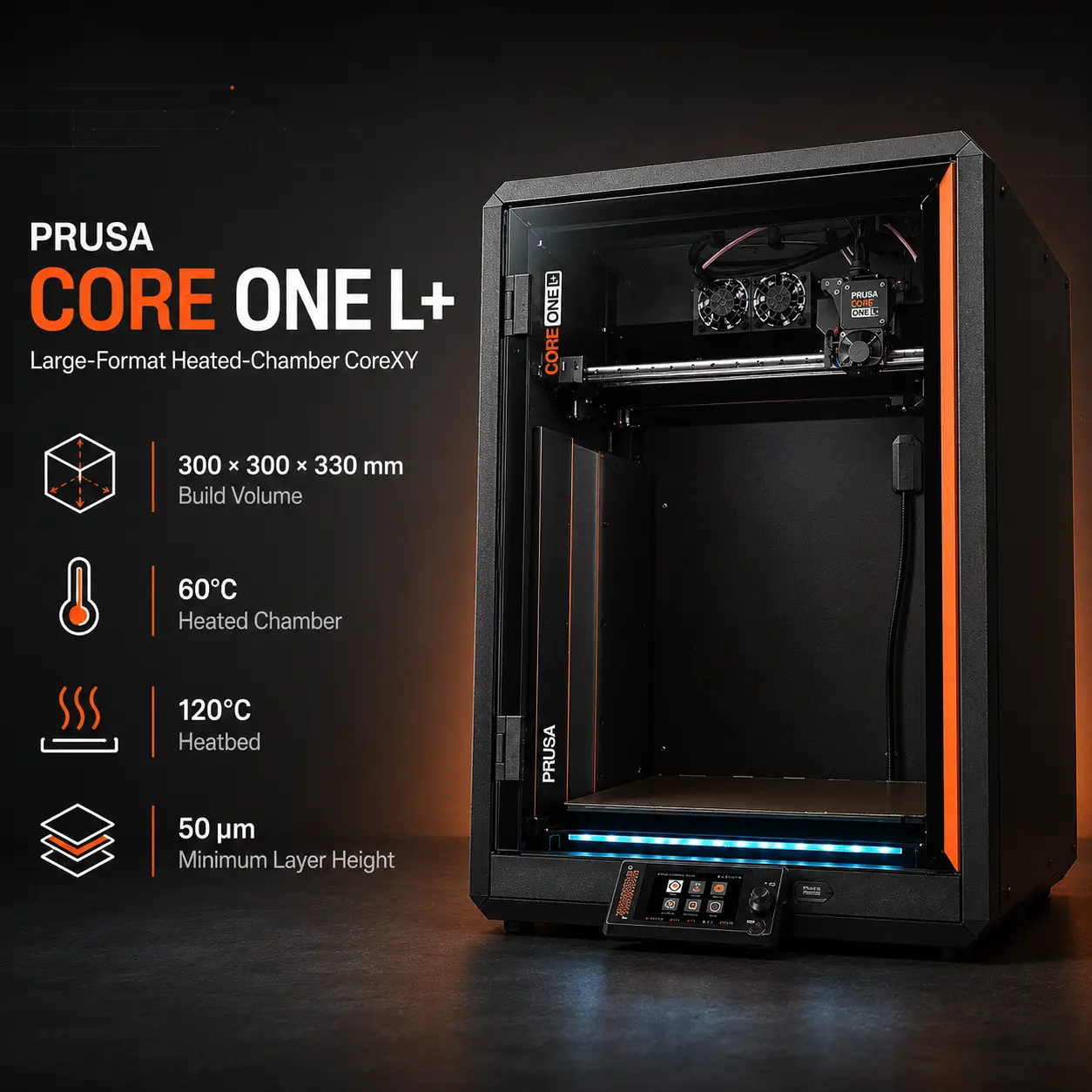
The Plus4 emphasizes a 370°C hotend, 65°C active chamber, 305 mm-class build area, engineering and high-temperature materials, QIDI BOX compatibility, and a lower-cost entry into heated-chamber printing.
H2D is the stronger comparison when dual-nozzle workflows and Bambu's automation ecosystem matter more.
QIDI’s current US store lists the Plus4 at US$649, discounted from its regular US$799 price. Based on current exchange rates, the sale price is approximately €561 in the Eurozone, £480 in the UK, C$901 in Canada, A$917 in Australia, AED 2,384 in the UAE, and ₹61,947 in India.
Recommended use: Choose QIDI Plus4 when you need a 300 mm-class enclosed CoreXY printer with a 65°C independently heated chamber, 370°C hotend, hardened extrusion hardware, and broad engineering-material support at a lower price than many industrial-style high-temperature platforms.
305 × 305 × 280 mm.
QIDI specifies 600 mm/s as maximum toolhead speed. It does not publish one universal maximum printing-speed value.
Up to 370°C.
Up to 120°C according to QIDI's current Plus4 technical specification.
Yes. Its independent PTC chamber-heating system reaches up to 65°C.
A 0.4 mm bimetal nozzle. QIDI also lists 0.2, 0.6, and 0.8 mm options.
Yes. QIDI lists carbon- and glass-fiber-reinforced polymers and specifically identifies PA-CF/GF, PET-CF/GF, PPA-CF/GF, and PPS-CF.
Yes. QIDI lists hands-free automatic leveling.
Yes. It is compatible with QIDI BOX.
No. QIDI sells separate Combo configurations that include QIDI BOX.
The current QIDI BOX ecosystem supports up to 16 colors with additional boxes and expansion hardware.
Yes. QIDI lists 2.4 GHz Wi-Fi, Ethernet, and USB connectivity.
QIDI recommends QIDI Studio and also lists OrcaSlicer and PrusaSlicer.
QIDI currently lists the base Plus4 at US$649, discounted from US$799.
Yes. The current US store marks the Plus4 in stock and ready to ship.